
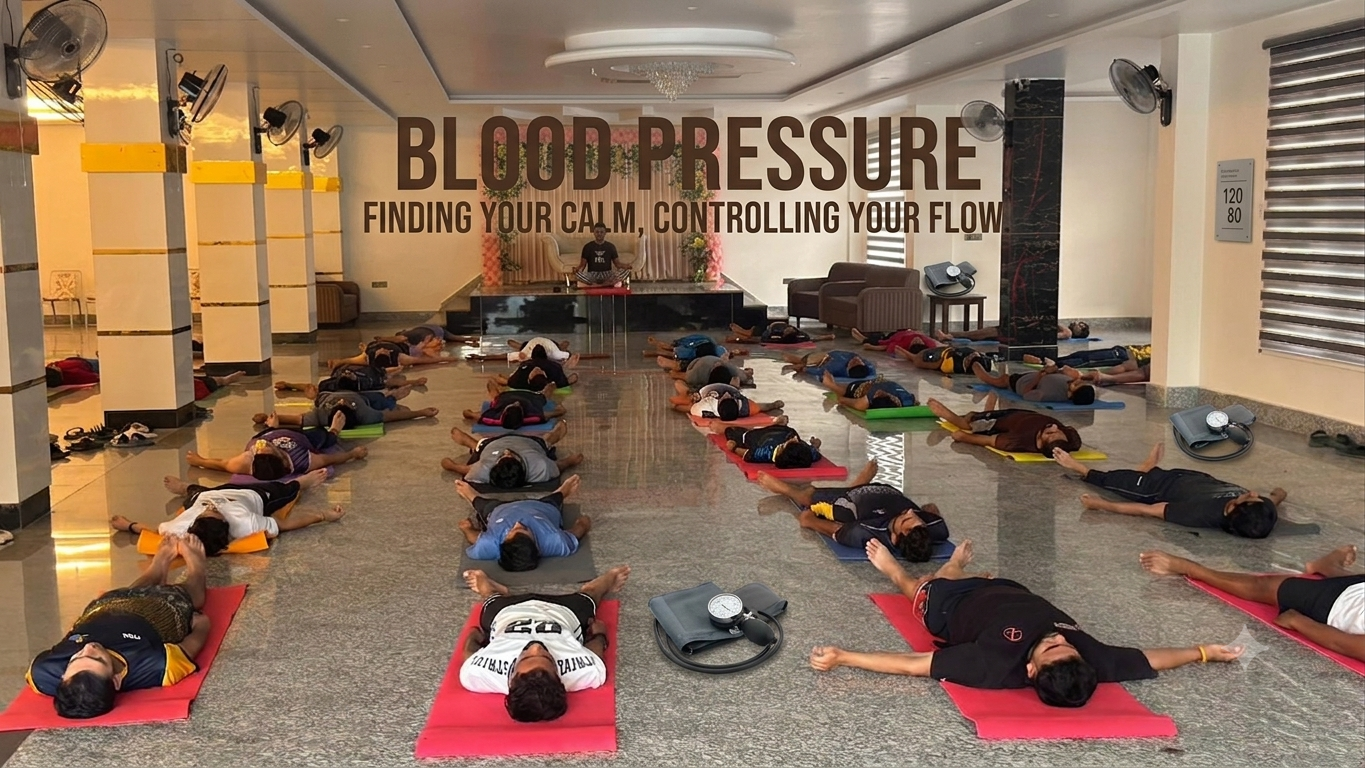
Blood Pressure:
Blood pressure is simply the force with which blood pushes against the walls of our arteries as the heart pumps it around the body. It is not controlled by the heart alone. The heart, arteries, kidneys, hormones, metabolism and nervous system are constantly working together to regulate it.
So why do some people develop high blood pressure while others don’t? And why does the dominant cause seem to change with age?
Different Age. Different Vulnerability.
Youth
In younger people, high blood pressure is less likely to be simply an age-related vascular problem. Metabolic dysfunction, hormonal disturbances, kidney problems, obesity, certain medications and lifestyle factors can all influence blood pressure. The arteries are generally still relatively elastic, so the problem may be more about regulation than structural stiffness.
Older Age – The Problem Changes
As we get older, the arteries gradually lose some of their elasticity. Elastin fibres, which allow arteries to stretch and recoil, can deteriorate over time. At the same time, the arterial wall becomes stiffer due to structural changes and, in some people, calcium deposition. As a result, the arteries become less capable of expanding when the heart ejects blood. The pressure wave therefore becomes larger, particularly affecting systolic blood pressure.
This is why arterial stiffness becomes an increasingly important contributor to hypertension with age. But chronological age alone doesn’t determine how stiff our arteries become. Two people of the same age can have very different vascular health.
Middle Age
And then there is the group in between, perhaps the most interesting group when we look at “stress” as a driver of blood pressure.
The chronically stressed middle-aged person.
The brain perceives a constant stream of problems and the sympathetic nervous system remains activated. Heart rate rises. The heart contracts more forcefully. Blood vessels remain more constricted. Hormonal signalling changes. Kidney regulation can change. Sleep becomes disturbed. And now the system begins feeding itself:
Stress → poor sleep → incomplete recovery → greater sympathetic activation → more stress.
And once poor sleep becomes chronic, it stops being merely a consequence of stress and becomes another driver of sympathetic activation.
The blood pressure we measure may therefore be the visible output of a system that has been chronically switched on.
Who are these people?
The businessman constantly under pressure. The working mother juggling work and home. Someone living in a stressful home environment. Someone whose work environment never allows the mind to switch off. Someone commuting for hours every day. Or simply someone whose body is chronically fatigued but whose mind never gets a chance to rest.
ROLE OF SALT
Salt certainly participates in blood-pressure regulation because sodium influences fluid balance and blood volume. But participation doesn’t necessarily mean that it was the original trigger.
NOTE: Unless kidney function or sodium handling is dysfunctional, salt is unlikely to be the primary cause of high blood pressure. Reducing salt may lower blood pressure to some degree, particularly in salt-sensitive individuals, but it does not necessarily address the underlying cause when hypertension is being driven by other pathways.
For some people, sodium restriction can make a meaningful difference. For others, the effect may be relatively small. If the underlying driver is chronic sympathetic activation, metabolic dysfunction, hormonal disturbance, kidney disease or vascular aging, simply removing salt doesn’t fix the system that produced the problem.
SO WHAT IS THE SOLUTION besides your prescription if there is any?
Don’t treat blood pressure merely as a number. Find the pathway that is driving the number.
In a young person, look for metabolic, hormonal, kidney and lifestyle-related causes. In an older person, consider arterial stiffness and vascular health alongside kidney and metabolic function. And in the middle-aged person, don’t underestimate chronic stress, poor recovery and sleep.
Important question: Can you think of something that connects all of these?
The Mind
There is a reason I put Mind as one of the foundational pillars of health. Let’s take blood pressure as an example. What would be one of the best ways to influence it? Not by trying to keep the body permanently parasympathetic, because sympathetic activation is essential for movement, exercise and responding to challenges. The real goal is to improve our ability to move appropriately between sympathetic activation and parasympathetic recovery.
A calmer, more focused mind can reduce unnecessary sympathetic activation. Heart rate can come down. Vascular tone can change. Recovery can improve. And sleep can become easier.
This is important because telling someone who cannot sleep to simply “sleep more” is almost useless. They already know they need sleep. The problem is that their system may not be allowing them to enter the state required for sleep.
You cannot simply command the brain: “Sleep now.” But you can learn to change the state of the system through attention, breathing, meditation, reducing unnecessary mental noise and learning to observe rather than constantly react. And when the mind begins to calm, the body can begin to follow.
This is why I don’t see the Mind as something separate from physical health. Mind influences the nervous system. The nervous system influences the heart, blood vessels and kidneys. Together they influence blood pressure. The nervous system influences sleep. Sleep influences recovery. And recovery influences almost everything else.
We often try to fix each problem separately. Perhaps sometimes we need to step back and ask a different question:
What state are we driving the entire system from?
Perhaps this is why treating the number without understanding the state of the system can sometimes miss the bigger picture.
Interestingly, the very first page of my book begins with:
“From sympathetic to parasympathetic.”
The rest of the book goes much deeper into why this shift matters, and how we can learn to make it. Because perhaps the ultimate solution isn’t simply to lower blood pressure. It is to create a body and mind that can move appropriately between activation and recovery—and therefore no longer need to keep blood pressure unnecessarily high.

