
The problem with thinking only about muscle mass
Most people train for size. The mirror shows roundness. But a 2026 review published in the Journal of Cachexia, Sarcopenia and Muscle puts a number on something that coaches and movement scientists have sensed for years: muscle mass alone cannot describe muscle health.
The review examines intramuscular fat – fat deposited within and between muscle fibres, and highlights how it increases disproportionately with age, independently of the loss of muscle mass. It is associated with reduced strength, power and mobility. It can also interfere with mitochondrial function and insulin signalling. In simple terms, you can have considerable muscle mass and still have poor muscle quality.
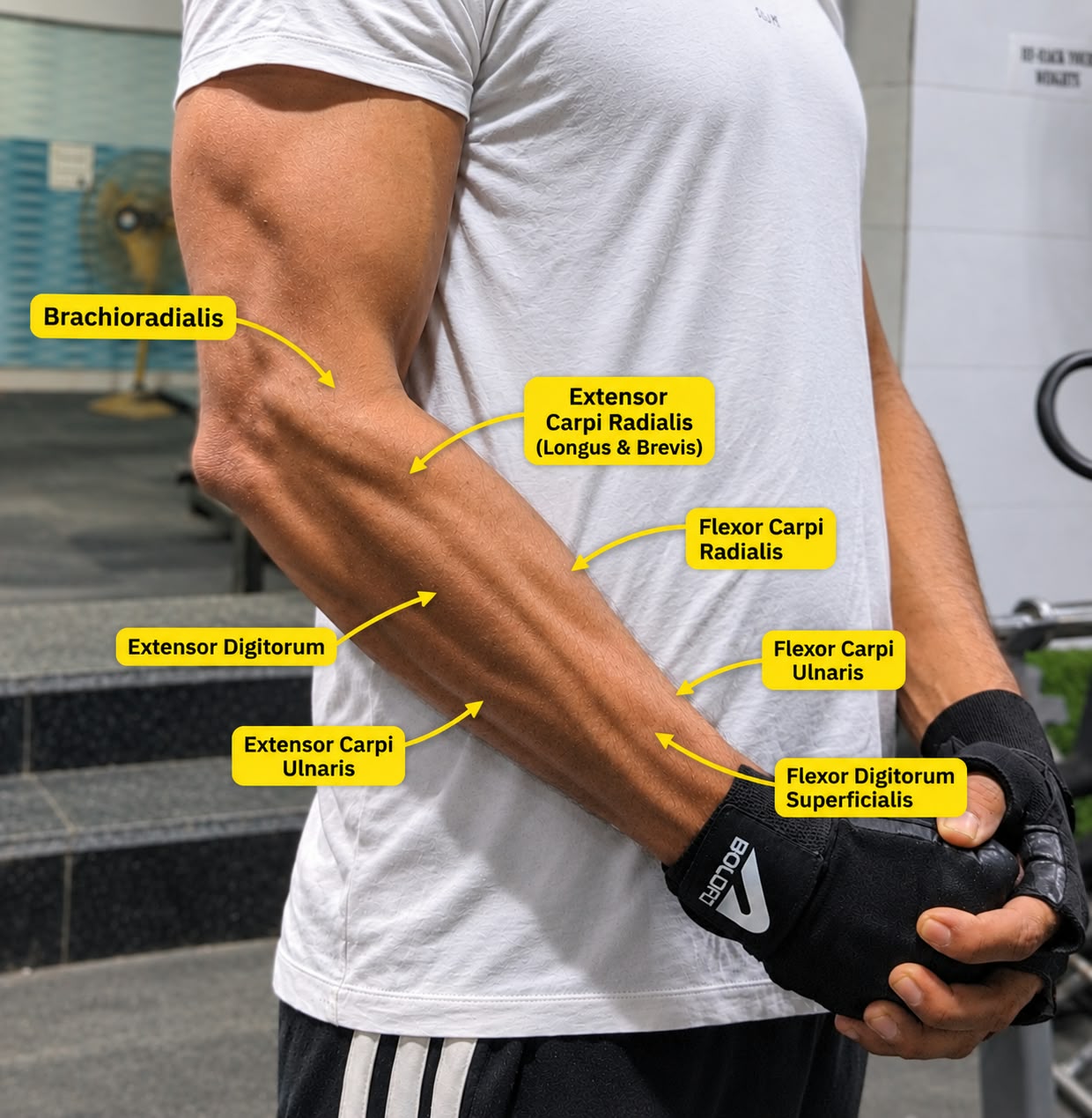
Look at the well-built forearm in the image above. The individual muscles are identifiable: brachioradialis, extensor carpi radialis, flexor carpi ulnaris, flexor digitorum superficialis, and others. Each has its own anatomical contour, with visible separation from its neighbours.
That separation is interesting. It tells us something about the underlying muscular anatomy and the degree of definition. But it is important not to confuse visible separation with proof of low intramuscular fat. Subcutaneous fat, muscle architecture, genetics and even lighting influence what we see. Actual intramuscular fat requires a different assessment. But any good anatomist or trainer can look at a muscle and gauge its quality. It shows up in our eyes.
What do we mean by muscle quality?
Muscle quality is not simply how a muscle looks or how much it weighs. It is a combination of its structural integrity, contractile capacity, metabolic health and ability to generate force efficiently. A good-quality muscle has healthy muscle fibres, appropriate architecture, efficient mitochondrial function, good neuromuscular activation and minimal excessive fat infiltration. It is not just about having more muscle tissue, but about how well that tissue performs its structural, metabolic and movement-related functions.
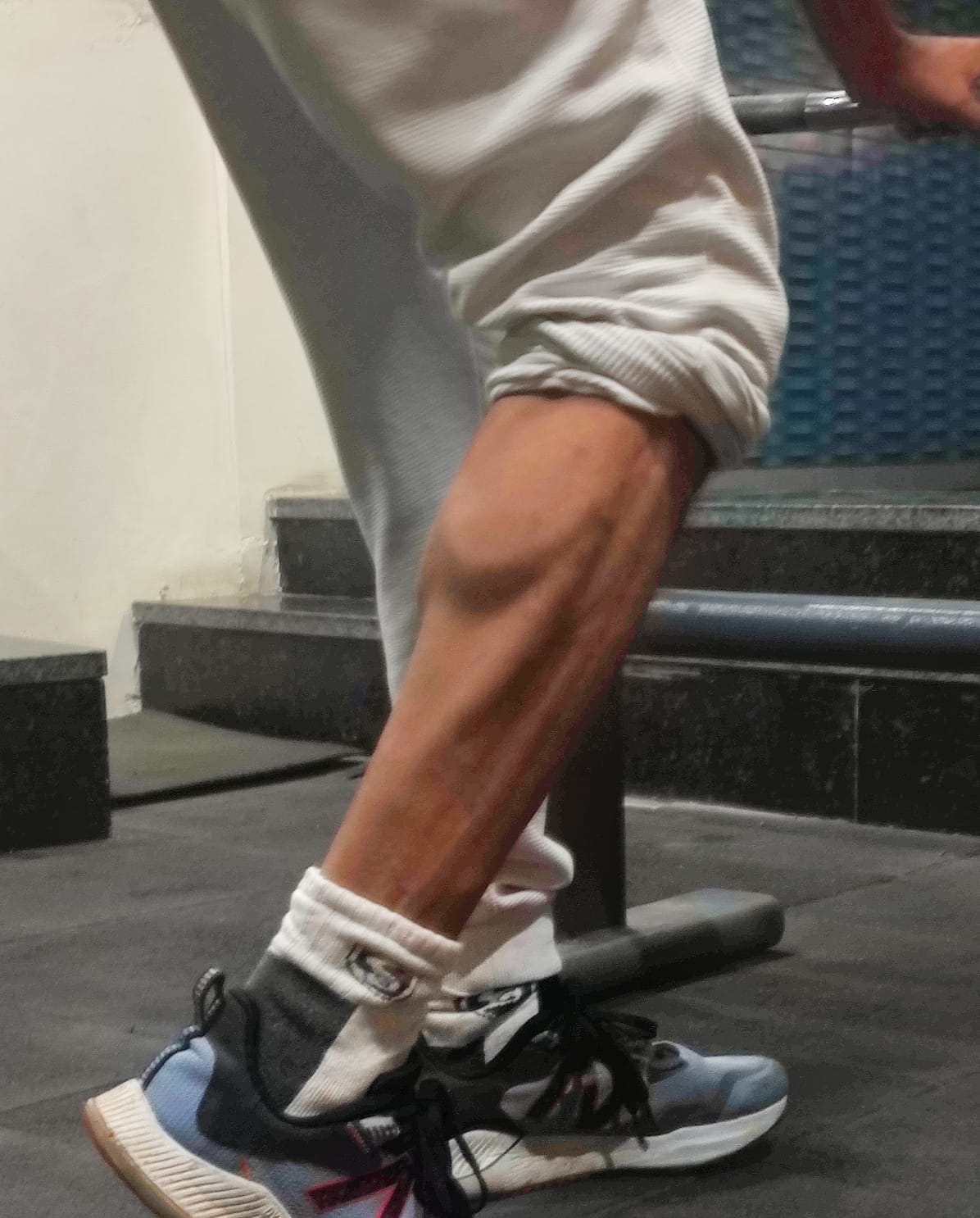
Here is where the everyday gym picture gets misleading. We see people who have trained for years with rounded, bulky arms and legs, and we automatically assume that the roundness represents pure hypertrophy. Sometimes it does. But muscle size and muscle quality are not necessarily the same thing. Fat infiltration can coexist with considerable muscle mass, lowering muscle quality without necessarily producing an obvious change in its external appearance.
This is particularly important as we age. Even at relatively healthy body-fat percentages, a person can have increased intramuscular fat. The subcutaneous layer we see in the mirror tells us very little about what is happening inside the muscle.
This does not mean these individuals lack strength. They may develop considerable strength as muscle size increases. The point is that muscle mass alone cannot tell us how much of that tissue is functionally competent, how well it supports metabolic health, or how efficiently it contributes to movement.
For the recreational lifter — the person repeatedly told that heavy lifting is the non-negotiable path to health – the message has been simplified into something that often serves the supplement and fitness industry more than it serves the individual.
Lift heavy, get big. That is the protocol.
What gets lost is the question underneath: big for what?
Lean muscle does not mean weak muscle. In trained athletes, a relatively lean muscular structure can generate tremendous power. In people who train consistently, it can provide more than adequate functional strength – enough for daily life, climbing stairs, carrying weight, recovering from a fall and getting up off the floor.
You do not need huge quads to protect yourself from a fall. You need muscles that fire well, joints that are stable, and a nervous system that coordinates the entire movement. These are outcomes of appropriate muscle development, structural balance and regular training, not simply of chasing maximal muscle cross-sectional area.
Obsessing over size is not necessary to live a healthy life. What we need is muscle that is metabolically competent supporting glucose disposal, mitochondrial function and insulin sensitivity and strong enough to protect us when something unexpected happens.
This is why most who favour adding muscle mass would advise any lean muscular guy to add more muscle mass without actually paying any attention to the fact that the lad can run a full marathon 😊 Their whole concept on strength revolves around muscle mass.
From a movement science perspective, there is another layer that size-focused training often ignores. Our anatomy itself determines how much force and power a muscle can contribute within a movement. A muscle working optimally in its role within the kinetic chain can produce considerable power without requiring unnecessary mass.
Building more muscle is not automatically an advantage. Beyond a certain point, additional mass may not contribute meaningfully to the movement demands. In some situations, it may even alter recruitment patterns and the coordination of the surrounding musculature.
This is a hypothesis worth exploring when we look at persistent elbow injuries among baseball pitchers, despite access to the best technology, facilities, training methods and recovery tools. If highly supported athletes continue to break down, perhaps we should also examine anatomical loading, movement mechanics and neuromuscular coordination rather than repeatedly looking for deficiencies in strength or conditioning.
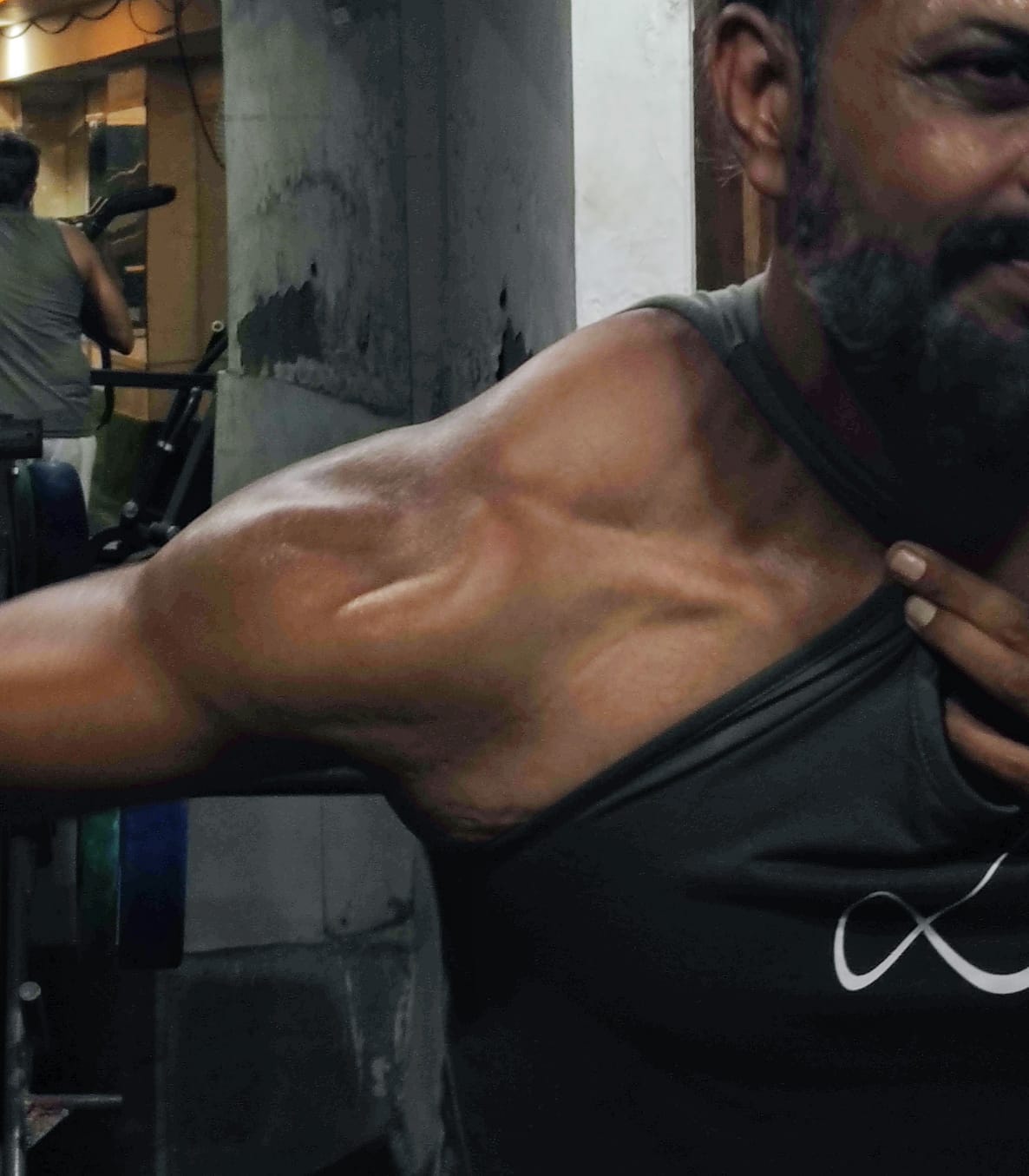
This is also why a well-built, lean physique should never be judged by one muscle in isolation. You can find someone with huge shoulders and comparatively small biceps, triceps or forearms. Muscle development needs to be considered in the context of the entire muscular system. Agonists, antagonists and synergists must work together, with each muscle contributing appropriately to the movement.
Multi-headed muscles, such as the triceps, deltoids and calves, offer an interesting illustration. Their different heads have distinct anatomical and functional roles. Looking at their development (read intra-muscular separation) together gives us a better picture of muscular development than simply measuring the size of one muscle.
So, the goal shifts. Not the biggest muscle you can build, but the most functionally and metabolically competent muscle you can sustain, within an anatomy that uses it efficiently.
The question was never simply how big your muscles can get. It is how well they function, how metabolically healthy they remain, and how efficiently they are being used.

