
Everyone’s heard of an ‘adrenaline rush.’ But what is it, really?
Let’s clear up the confusion with a story you’ll never forget.
Scene: A theft in action.
Characters: A thief and a homeowner.
If we could check their blood reports at this very moment, here’s what we’d find:
- The Thief (High Noradrenaline/Norepinephrine): Silent, alert, and vigilant. As he enters the home, his nervous system is firing with noradrenaline. His focus sharpens, his senses heighten, and his heart beats a little faster. He’s on high alert.
- The Homeowner (High Adrenaline/Epinephrine): He hears the noise! His adrenal glands flood his body with adrenaline, converted from the initial alert signals. His heart pounds, his lungs take in more air, energy rockets to his muscles. He’s ready to face the threat or run like the wind!
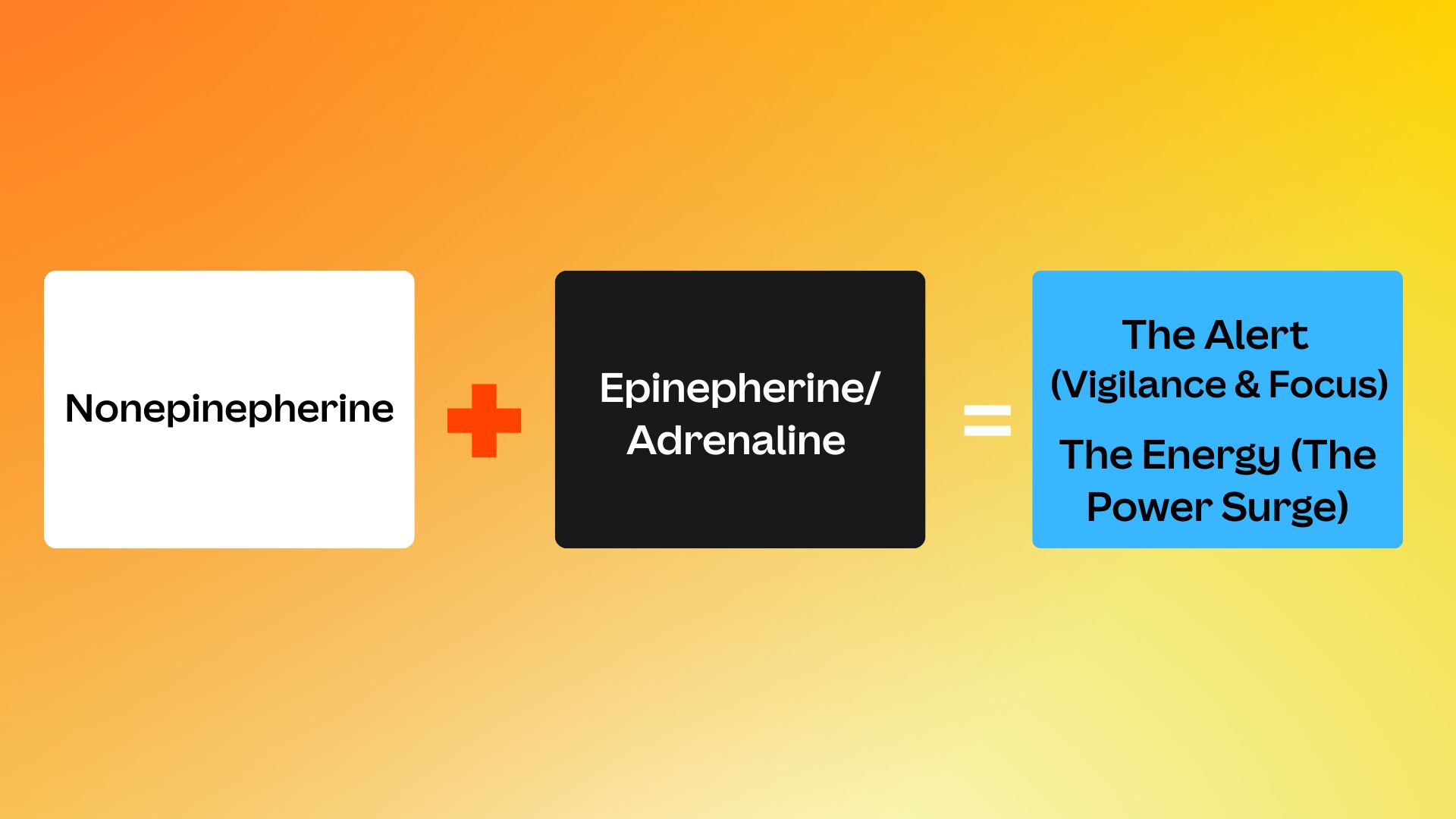
In a nutshell:
- Norepinephrine – The Alert (Vigilance & Focus)
- Adrenaline (epinephrine) – The Energy (The Power Surge)
The Sequel – the Aftermath
The owner relaxes after not hearing more noise. His adrenaline dips, and he crashes, catching up on sleep. His body struggles to dive back into the pool of homeostasis.
The thief, however, finished his job quietly, high on norepinephrine & dopamine.. His escape is rewarded as his brain floods with Serotonin (the glow of satisfaction). He’s euphoric!
The Morning After – the Reality: The homeowner wakes up to the theft & to survey the mess. The immediate danger is gone, but his body raises his Cortisol – the long-term stress hormone. This causes the lingering anxiety, worry, and inability to fully relax after a stressful event.
Note: this is what typically happens in your day today life if you take your work home & continue to focus on it.
The Full Story Arc:
- Norepinephrine: The alert thief.
- Epinephrine: The homeowner’s powerful surge.
- Dopamine/Serotonin: The thief’s reward.
- Cortisol: The homeowner’s long-term stress.
So next time you feel that rush (or that crash afterwards), you’ll know the incredible chemical story playing out inside you!
Practical takeaway: We must understand what’s driving the stress and call it a stress.

