
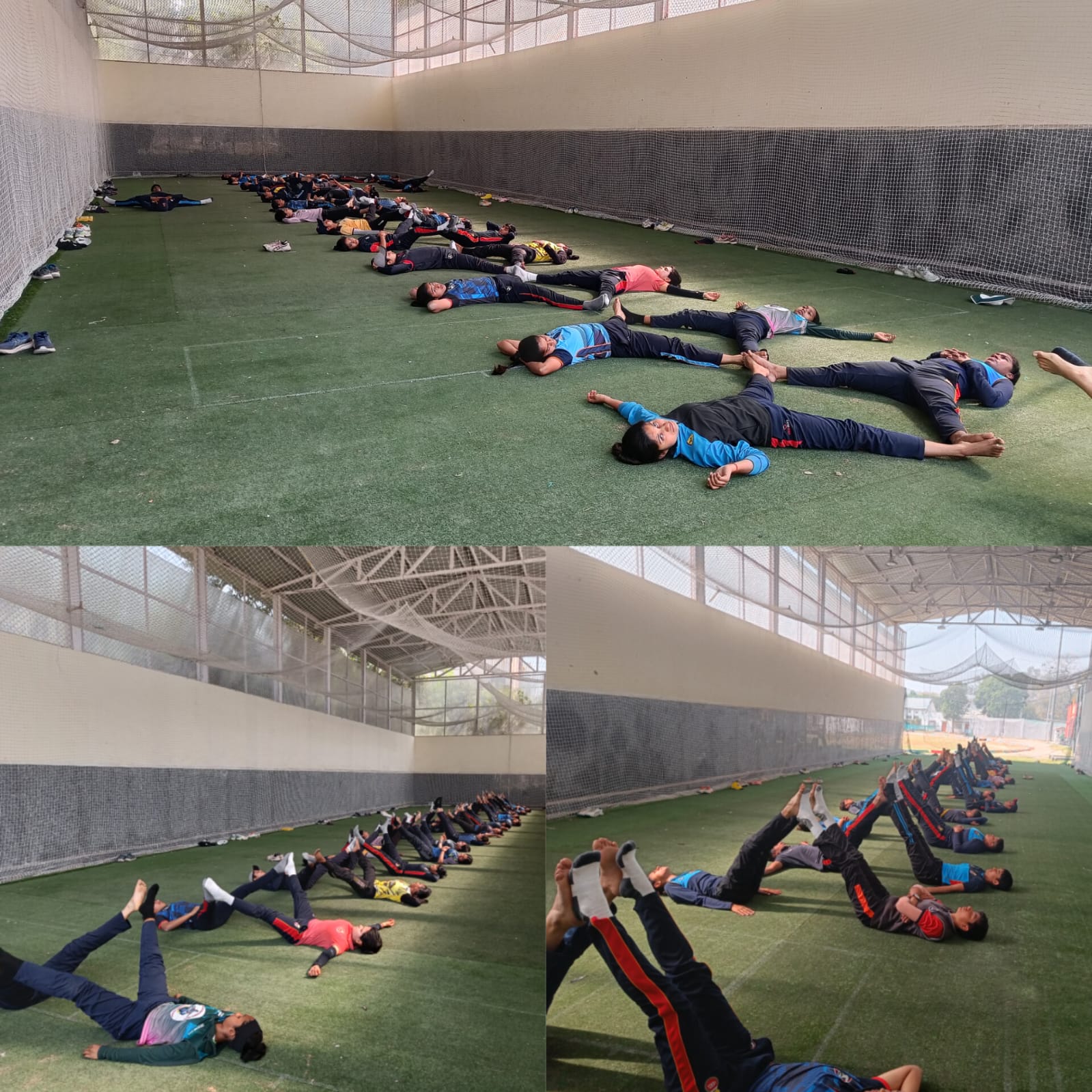
When we look at longevity space, most scientists are looking at ways to control systemic inflammation, maintain good immune function, and maintain a healthy musculoskeletal system. What if we could manage all of this with something as simple as stretching. What if I could convince you that stretching can contribute to all of these longevity processes.
SCIENCE: Animal and some human work shows stretching can actively promote inflammation resolution not just calm things down, but shift the eicosanoid profile toward pro-resolving mediators (like resolvins), reduce neutrophil infiltration, and lower local inflammatory markers in connective tissue. There’s evidence it decreases circulating pro-inflammatory cytokines systemically too, partly via better blood flow, parasympathetic activation, and reduced mechanical stress.
Let me explain stretching from a different angle today:
I think stretching is the most under-valued form of exercise. Yes, you can live without it, and it may not seem like it burns calories in the moment. However, stretching is like a longevity drug. It is about what your body becomes capable of doing across the entire day, over months and years.
NOTE: We often confuse stretching with flexibility. Flexibility is more of an inherent anatomical trait. It is influenced by how we are built and, to some extent, develops slowly over years.
Stretching, on the other hand, is not about becoming flexible. It is about restoring the body. When we repeatedly load our muscles and joints in limited ranges, they adapt and settle into those positions. Stretching is the process of bringing that system back toward its original, usable range. Stretching is a way of restoring anatomical homeostasis
What actually happens to your body when we stretch
Whether it is gym training, walking, or daily chores, the muscles you use the most tend to stay in a slightly shortened and biased state. Over time, this creates:
- Overactive muscles
- Underactive muscles
- Poor load distribution
- Repetitive stress on the same tissues
This is what most people call tightness. But tightness is not just about flexibility. It is about imbalance and inhibition. If retraction of shoulders or arms is available to us, then it is not just about leverage but about accessing the musculature that was not being used.
The hidden cost of a tight body
When movement is imbalanced:
- Some muscles work more than they should
- Others do not contribute enough
- Joints experience uneven stress
- Small tissues compensate for large ones
This leads to what we casually call “niggles”:
- Knee pain
- Back stiffness
- Shoulder discomfort
Most people ignore these because they seem small. But physiologically, they are not.
Every niggle has a cost
Each time a tissue is irritated:
- The body initiates a repair response
- The immune system gets involved
- Inflammation is triggered locally
Once in a while, this is normal.
But when it happens every day – the body never fully exits the repair state
When repair never completes
Chronic low-grade irritation leads to:
- Persistent inflammation
- Slower recovery cycles
- Increased fatigue
- Reduced tissue quality
The immune system is not used up, but it becomes constantly engaged, less efficient, and slower to resolve problems. The system shifts from adaptive to protective and this is what a protective system looks like:
- Movements become guarded
- Range reduces
- Compensation increases
- Fatigue sets in faster
You are still moving. You are still exercising. But your system is now spending energy managing problems that should not exist in the first place.
Where stretching fits in
Stretching, when done correctly, does not just increase range.
It
- Reduces unnecessary tension
- Restores muscle balance
- Allows proper recruitment
- Improves load distribution
In simple terms, it removes the reasons your body had to compensate in the first place
Why this matters more than calorie burn
A balanced system:
- Distributes stress evenly
- Reduces repeated tissue irritation
- Completes recovery cycles efficiently
- Stays out of chronic low-grade inflammation
This leads to:
- Better movement quality
- Lower unnecessary fatigue
- Higher system capacity
And this is where the ‘burn’ actually changes. Not because stretching burns calories, but because a well-functioning system can sustain higher total output.
Across:
- Movement
- Recovery
- Daily activity
Over time, this is what separates a body that struggles from a body that adapts.
The link to longevity
Longevity is not just about living longer. It is about:
- Maintaining function
- Preserving movement
- Avoiding chronic inflammation
- Sustaining recovery capacity
A body stuck in constant low-grade repair:
- Accumulates damage
- Recovers slower
- Becomes metabolically inefficient
A body that moves well:
- Repairs efficiently
- Adapts to stress
- Maintains internal balance
Final thought
Stretching is not about flexibility. It is about removing unnecessary stress from the system.
If your body is constantly repairing what you didn’t need to damage, it will never perform at its full capacity.
And over time, that difference is not just visible in movement. It shows up in your health, your energy, and ultimately, your longevity.
For more on the practical side of stretching (dynamic vs static, pre/post workout, and anatomical nuances), check these articles:

