
1st January 2024 – a very happy new year to anybody reading this.
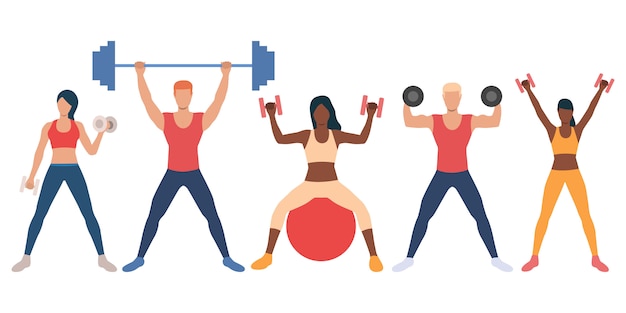
I have a question if anybody can answer:
If I have excellent mitochondrial health, wouldn’t that, by default, lead to strength for non-athletes? Hear me out
Disclaimer: Of course, doing both is ideal. I understand it. And also that strength training has huge benefits ranging from protein synthesis to overall health including brain.However, I wanted to dig into both to see which one is more beneficial.
If you had to choose between muscle mass and the number of mitochondria (being a non-sportsman), what would you prioritize for health? Health, in this context, refers to avoiding chronic diseases and inflammation and who is a better to ask than you. It’s an unusual question, but based on my current understanding, it seems possible to work on both independently.
Consider the following scenarios:
Scenario 1: Heavy Resistance Training Engaging in heavy resistance training exclusively improves muscle mass (mTOR & AKT – protein synthesis) but not necessarily enhance mitochondrial health. This is evident in many bodybuilders who experience breathlessness quickly—a sign of poor mitochondrial health. Heavy resistance training alone does not contribute significantly to improving mitochondrial health. Instances of bodybuilders developing diabetes underscore that muscle mass is not the sole determinant of overall health.

Scenario 2: Light Movement Exercises Alternatively, incorporating light movement exercises like brisk walking, stretching, jogging, cylcing, any light sporting activity, or yoga, etc while understanding how to progressively stress the system, can lead to improved fat oxidation and potentially an increase in the number of mitochondria mitochondira biogenesis – AMPK pathway), particularly in slow-twitch fibers. While this approach may not result in significant muscle mass gain, it helps maintain existing muscle mass. Enhancing mitochondrial health by increasing the number of mitochondria in slow-twitch fibers can also assist in lactate utilization from fast-twitch muscle fibers—a win-win situation.
Lets understand these two critical pathways that differentiates training:
- mTOR and AMPK Pathways:
- The mTOR (mechanistic target of rapamycin) and AMPK (AMP-activated protein kinase) pathways are indeed critical in regulating cellular responses to stress and energy status.
- mTOR is associated with muscle protein synthesis and growth, often activated in response to resistance training and sufficient protein intake.
- AMPK, on the other hand, is activated during energy depletion and promotes energy conservation. It’s often associated with endurance exercise and situations where cellular energy is in demand.
- Cross-Over Between Pathways:
- While these pathways are often associated with specific types of exercise, there is some overlap. For instance, both pathways can be activated during different phases of exercise, and certain activities may stimulate both pathways to some extent.
- The key, as you mentioned, is likely in the progression and variation of exercise. Different activities can complement each other and contribute to overall health and fitness.
Note: For individuals who aren’t athletes, climbing stairs both up and down can be considered a form of leg strength training. It should yield the benefits associated with strength training since it imposes a comparable level of stress on the muscles. Similarly, brisk walking for those accustomed to walking can also have similar effects. There seems to be a potential crossover between the mTOR and AMPK pathways. The activation of these pathways is crucial, and they are accessible throughout our body. It’s reasonable to assume that stressing the system through various means should activate the mTOR pathway for non-strength training individuals. Emphasizing progression appears to be the key in this context
Fact: Compromised mitochondrial health is found to be the cause of several chronic diseases like diabetes, cancer etc.
But then the question comes how does mitochondrial health lead to strength gain?
From my perspective, anyone working to improve fast oxidation is inadvertently: –
- Working on glucose metabolism first (fast-twitch muscle fibers) while simualtaneously working on slow-twitch fibers. Improving fat oxidation is intricately linked to glucose metabolism, as both systems function simultaneously. The key lies in progression, an aspect I have understood via experience.
In my current study involving three boys—two for bodybuilding and one for fat loss—I’ve achieved remarkable results in just three weeks, including substantial fat loss (4 kgs for one) and gains in lean muscle mass in the other two. The reason behind this success is my dual approach: emphasizing fat oxidation through stretches and light movements alongside muscle mass building. I would love to present this study to you once its done.
Returning to my question: do you think the emphasis on strength and muscle mass for longevity is overly biased toward resistance training? Isn’t it clear that improved fat oxidation is the key to health? Enhancing fat oxidation simultaneously improves strength, unlike the one-way relationship suggested by conventional wisdom.
Ques: Why pick up one when both strength and mitochondrial health is important?
Simply because, in a real time scenario, not everybody can handle both nutrition and exercising together. People love to take their walks or practice yoga or just stroll around instead of pumping iron.
To clarify, it seems evident to me that it’s not just about gaining muscle mass; rather, it’s more about maintaining muscle mass for good health. We can achieve this while improving fat oxidation?
In summary, my perspective underscores the importance of a holistic exercise approach, considering mitochondrial health, fat oxidation, and muscle mass maintenance. It’s not solely about muscle mass gain, where resistance training is the only avenue. Aerobic health, with its inherent anaerobic elements, is crucial, as we consistently engage the same musculature. It’s essential to recognize that individual responses to exercise can vary, and a personalized approach may be optimal for long-term health and fitness.
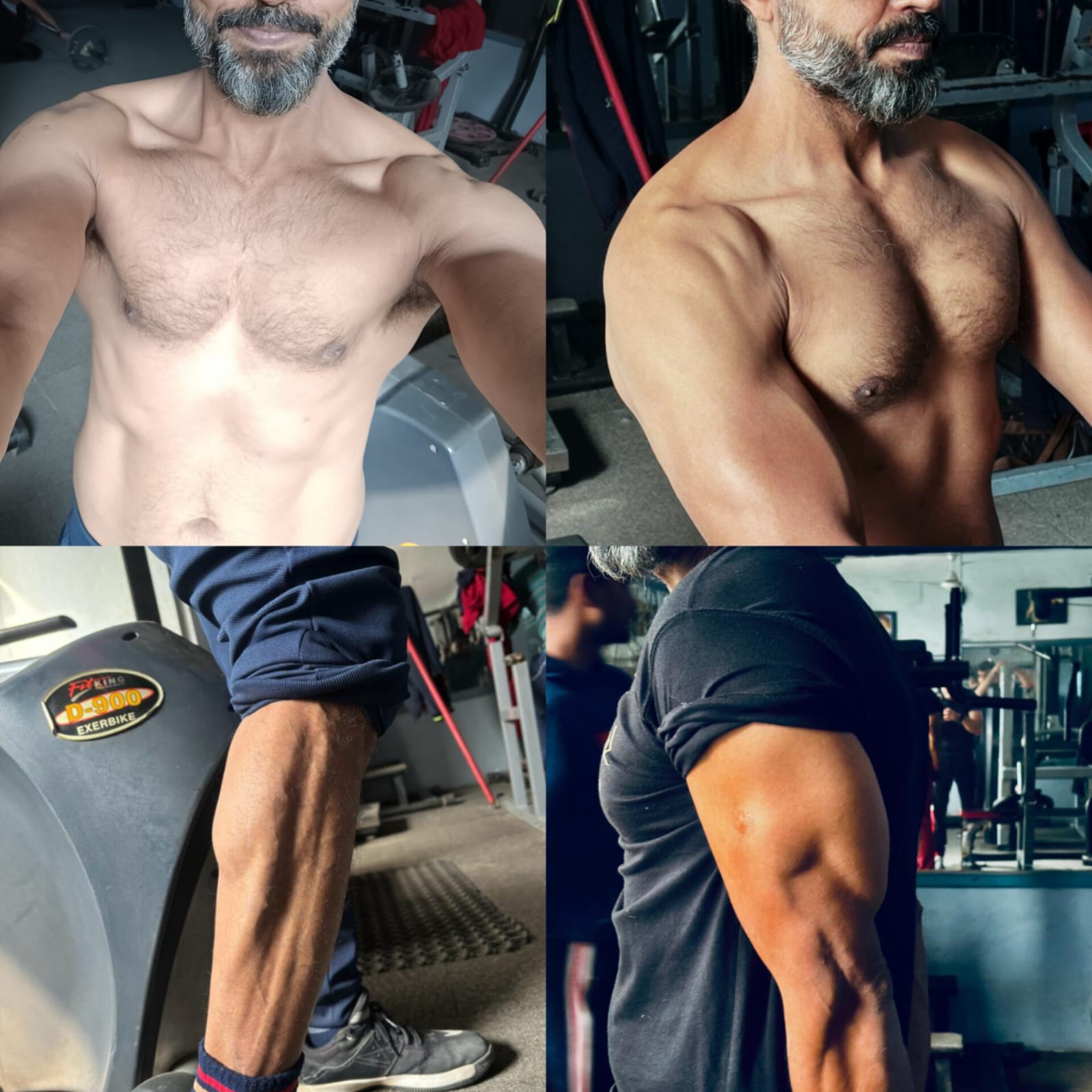
I am huge strength training fan!
The reason I delve into this is not to discount strength training (these pics are my last week pictures) but to address the reality in a country like India, where 90% of the population lacks access to a gym or, people who do not like strength training. They start getting aches and niggles because they do not have a personal training working with them. Asserting that strength is essential for longevity may neglect and disregard the majority of these people some of who have maintained good health without conventional strength training.
Warmest regards and a very happy new year again

