
#highcholesterol#hightriglycerides
TG – Triglycerides
Are you experiencing high cholesterol and high triglyceride (TG) levels? It’s important to note that high TG levels are just as concerning as high cholesterol levels. Despite the prevalent societal focus on cholesterol in lipid panels, TGs also play a crucial role in the digestion and transportation of fats throughout the body.
Here’s a breakdown of the process:
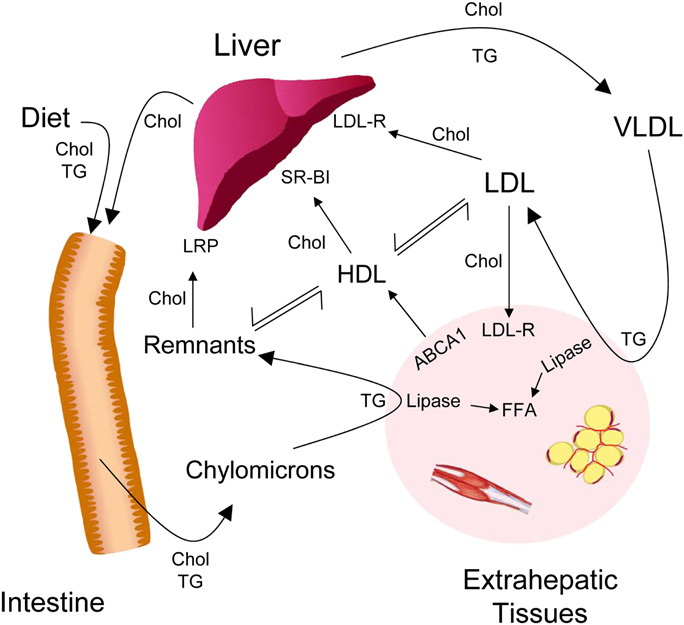
- fats are digested in the small intestine and converted into small fat globules called chylomicrons, which contain TGs, cholesterol, cholesterol esters, and lipoprotein Apo B48.
- Lipoprotein Lipase is responsible for breaking down the TGs in chylomicrons into Free Fatty Acids (FFA) and glycerol.
- The FFA can either be used as energy in skeletal muscles or stored in adipocytes, while the glycerol goes to the liver.
- The leftover chylomicron with cholesterol is repackaged as Very Low-Density Lipoprotein (VLDL), which goes through the same process and eventually becomes Low-Density Lipoprotein (LDL).
High TG levels in the blood can indicate that the lipase was unable to break down the TGs or that the body is consuming more fat than it can clear out. This can lead to health problems as TGs should be broken down for energy or storage.
To help reduce TG and cholesterol levels, it’s important to reduce overall food intake, intermittent fast, cut out processed foods, and consume less calorie-dense food. Exercise is also crucial for improving mitochondrial health, which is responsible for converting fat into energy. A healthy mitochondrial system is essential for overall health and well-being and can help reduce the risk of chronic diseases such as diabetes and cancer.
Please note that this post is not intended to provide medical advice, but rather a simplified scientific explanation of the subject.
 Umesh Chhikara