
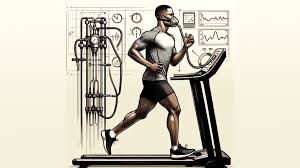
The obsession with VO2 max ignores people like yogis or centenarians who thrive without ever chasing aerobic peaks.
How can something that we can change dramatically in short span be a marker of longevity? Are we saying that a runner is healthier than a non-runner? Because a runner will have a higher VO2 max by default?
I beg to differ on this and here is my argument.
Rethinking VO2 Max as the Best Health Marker: Why It Might Not Be the Ultimate Indicator of Longevity
In recent years, there has been a growing consensus in the scientific and fitness communities that VO2 max is one of the most reliable markers of health and longevity. This measure, which refers to the maximum amount of oxygen your body can utilize during intense exercise, has long been associated with cardiovascular fitness and overall well-being. While there’s no doubt that VO2 max plays a role in assessing cardiovascular health, the idea that it is the “best” or ultimate indicator of health and longevity is oversimplified and, frankly, misguided.
The Case Against VO2 Max as the Best Marker of Longevity
VO2 max is often praised for its association with lower risks of chronic diseases like heart disease, diabetes, and hypertension. Higher VO2 max levels are linked to better cardiovascular efficiency, and it’s believed that maintaining a higher VO2 max could help delay the onset of age-related decline. But what’s often overlooked is that VO2 max can be improved relatively quickly—in a matter of weeks—through targeted exercise. This raises a critical question: Can something that can be changed so rapidly really be a reliable marker of long-term health or longevity?
1. Fitness vs. Long-Term Health
While VO2 max is a great reflection of someone’s current cardiovascular fitness, it doesn’t tell us much about their long-term health trajectory. The fact that VO2 max can be influenced by short-term changes in activity levels or exercise programs means that it’s not as stable or reliable as a measure of long-term health. Someone can improve their VO2 max in a matter of weeks through intense aerobic training, but does that really equate to better health or a longer life? Not necessarily.
2. A Snapshot, Not a Long-Term Indicator
VO2 max gives a snapshot of your fitness at a particular point in time. But here’s the thing: it’s just a snapshot. A low VO2 max at the start of the month doesn’t mean a person is destined for poor health or shorter life expectancy. With a few weeks of exercise, that person can increase their VO2 max significantly. The real question, however, is how consistently someone maintains good cardiovascular health over the long term. It’s the long-term trends, not the short-term fluctuations, that matter when assessing longevity.
Additionally, VO2 max primarily reflects peak performance during intense exercise, which may not be representative of the body’s efficiency during everyday activities
Health Should Be More Than Just VO2 Max?
It’s essential to consider that health isn’t simply about VO2 max. Many individuals who don’t engage in high-intensity training or running live long, healthy lives. A person who eats a balanced diet, manages stress effectively, gets enough sleep, and stays active in other ways (like walking or doing moderate exercise) can be just as healthy as someone who regularly trains for endurance sports.
Several factors contribute to health and longevity beyond VO2 max, including:
- Genetics: Some people are naturally predisposed to excellent cardiovascular health, even without extensive physical training.
- Diet and Lifestyle: Regular physical activity (even low-intensity), a balanced diet, mental well-being, and stress management play significant roles in overall health.
- Metabolic Health: Health metrics like blood pressure, cholesterol, and blood sugar are just as critical to long-term health.
- Musculoskeletal Health: Strength, flexibility, and mobility are vital for healthy aging.
Focusing too heavily on VO2 max overlooks the broader picture of what contributes to overall health. VO2 max is one piece of the puzzle, but it’s far from the whole picture.
The Trend of Over-Specialization in Health Metrics
There’s a trend in the scientific community to focus on specific health metrics—whether it’s VO2 max, strength, or other single factors—while downplaying others. For example, in recent years, strength training became the center of attention for its ability to prevent muscle loss, improve bone density, and support metabolic health. Now, VO2 max has taken the spotlight due to its association with cardiovascular health and longevity. These trends often make it seem as though these factors are the only indicators of health, but they aren’t. Scientists & studies only explain us how they are related to health but calling it a best predictor of health is a bit of a stretch in my point of view.
Why VO2 Max Isn’t a Complete Measure of Health
VO2 max is certainly useful for understanding someone’s cardiovascular fitness, but it’s a narrow measure. It doesn’t account for all the other aspects of health that are critical for longevity, such as:
- Mental health and emotional well-being
- Musculoskeletal integrity
- Nutritional status
- Hormonal balance
A person with a lower VO2 max, but who is actively maintaining good metabolic health, managing stress, and eating a nutrient-dense diet, can still be extremely healthy. On the other hand, a runner with a high VO2 max might still face health issues related to overtraining, mental health struggles, or other conditions that don’t relate to cardiovascular fitness.
The Danger of Over-Focusing on One Metric
Relying too heavily on any one fitness or health metric can be problematic. Health is multi-dimensional, and no single measure can capture the full spectrum of a person’s well-being. By focusing too much on VO2 max, we risk neglecting other crucial factors like strength, musculoskeletal health, mental health, and the importance of a balanced, sustainable lifestyle.
If not VO2 max then what could be a reliable marker for longevity? Could it be testosterone? Let’s see if I can make a valid argument
Conclusion: A Holistic Approach to Health
While VO2 max is certainly important for assessing cardiovascular fitness, it is not the ultimate marker of health or longevity. It is a narrow metric that reflects only one aspect of a person’s overall health and can be influenced by short-term changes in exercise and lifestyle. To understand true health and longevity, we must take a more holistic approach, considering factors like nutrition, mental health, strength, and hormonal balance—factors that are harder to change and often provide a more stable and meaningful picture of long-term well-being.
Endogenous testosterone, in particular, could be a better marker of health and longevity because it reflects deeper, long-term physiological processes that aren’t easily manipulated by short-term exercise or training. But even with testosterone, the key to longevity lies not in any single metric but in a balanced, sustainable lifestyle that incorporates healthy habits across all areas of life.
Ques: Can somebody confirm if a person can have a good VO2 max even though his CAC score is not zero? Basically saying that is it possible to have an artery blockage with decent VO2 max?
I think so because I have seen fit people getting heart attacks. But doesn’t that mean they were unhealthy?
Note: I am not trying to contradict any research or science here. As someone who has kept both VO2 max and muscle healthy; I feel there is more to health than just these.
VO2 Minimum and Heart Rate
Example:
Person A: Walks a couple of miles and shows his heart rate to be say 120.
(Or translate this into stairs climbing, brisk walk, jog, sprint, etc depending on age, training history, current hearlth etc.)
Person B: Walks the same miles with same pace and shows the heart rate to be 70.
Regardless of their VO2 max; can we tell who has a healtheir heart? My answer us YES. What’s yours?
Just as heart rate can be a marker of cardiovascular health—where a lower resting heart rate often indicates better cardiovascular fitness and a more efficient heart—VO2 minimum could serve as an indicator of how efficiently the body utilizes oxygen during low-intensity activities. If a person is using a higher amount of oxygen (VO2) than typical for a given activity or rest, it may suggest that their body is less efficient at performing basic tasks, which could signal potential health concerns.
For instance, in cases of cardiovascular disease, respiratory issues, or obesity, individuals may have higher baseline oxygen consumption at rest or during low-intensity work, indicating a less efficient system. Similarly, just as heart rate can be elevated during a low-intensity task in unhealthy individuals, VO2 minimum might also reflect suboptimal health or reduced aerobic efficiency.
For the non-athletic population, VO2 max may not be as directly relevant to daily life. Most people will not be regularly engaging in maximal exertion where VO2 max plays a role. However, the minimum oxygen consumption (VO2 minimum) during rest or low-intensity activities could be a more practical indicator of overall metabolic and cardiovascular efficiency.
VO2 Minimum is influenced by health factors like:
- Resting metabolic rate
- Cardiovascular and respiratory efficiency
- General physical fitness
- Chronic conditions, such as obesity, heart disease, or pulmonary disorders
USP: Unlike VO2 max, which improves with targeted aerobic exercise that enhances cardiovascular and muscular efficiency, VO2 minimum is more reflective of the systemic efficiency of the body at rest and during low-intensity tasks. It can not be improved just by exercising. There may be lot of underlying issues and isn’t those factors determine LONGEVITY!?
Summary: VO₂ Max Is Not a Longevity Marker — Let’s Be Honest
❌ VO₂ max ≠ Immunity from Disease
Improving VO₂ max only improves aerobic capacity. It says nothing about your risk of:
- Cancer
- Alzheimer’s or dementia
- Stroke or aneurysm
- Autoimmune or inflammatory diseases
A 75-year-old who raises their VO₂ max doesn’t suddenly become immortal. They’ve just optimized cardiopulmonary performance, not erased risk.
🧍♂️ Real-World Example 1
Two 80-year-olds have identical VO₂ max scores.
- One lives to 100.
- The other dies at 84 of a brain stroke.
Same number. Completely different outcomes.
🧍♀️ Real-World Example 2
Two 50-year-olds:
- One trains for VO₂ max — lean, great endurance.
- The other lifts weights — strong, muscular, low VO₂ max.
Who lives longer? Nobody knows. Because longevity isn’t determined by a single metric. It’s a systems issue, not a speed test.
🚨 Hard Truth
People die of heart attacks while running.
People collapse on treadmills.
Marathoners with high VO₂ max still suffer cardiac arrest.
What does that say?
VO₂ max didn’t save them. It doesn’t inoculate you from silent pathologies, genetic triggers, or vascular weaknesses.
✅ Bottom Line
VO₂ max is a useful marker of heart-lung capacity. That’s it.
It’s not a guarantee.
It’s not a shield.
It’s not a predictor of how long you’ll live.
Let’s stop pretending it is.
 Umesh Chhikara