
#fructose hashtag#healthynutrition hashtag#fiber hashtag#calories
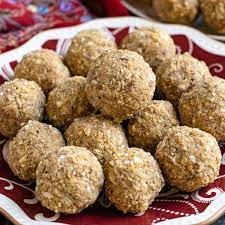
North Indians staple diet: vegetables, dairy, wheat, dals, & legumes. Seasonal fruits
One of the staple winter treats in Northern Indian households is the ‘Goond key ladoo.’ It isn’t merely a delight relished by us North Indians; it’s revered as the holy grail of nutrition for both the brain and bones.
Caveat: Despite its sweetness and the inclusion of ghee (saturated fat), one might wonder how it can be deemed healthy leave alone it being healthiest
Confession: I am currently working on increasing muscle size but my mother has packed an entire protein box of ladoos for me. I have been eating at least two, sometimes three or four, a day—with no noticeable fat gain thus far since last 4 weeks. Just finished my quota of the season 😦
Confession 2: A subject involved in my four-week research on synergy between nutrition and exercise has been requesting to add a ladoo into his nightly routine with a glass of milk since the study’s commencement because he can’t resist 🙂 After two weeks of training, I’ve granted him permission for 1/2 ladoos starting today.
So, how could ladoos be considered beneficial?
Negative Aspects:
– The primary nutritional drawback of ladoos is sugar – sucrose.
– The combination of ghee and sugar is a secondary concern for me. Anything which has saturated fat and sucrose is not healthy in my books.
– The presence of wheat or besan (refined flour with minimal fiber) is another drawback in my view
Positive Aspects:
– Coconut: A rare inclusion in North Indian diets, providing health benefits. And since this is the only food where majority of north Indians consume coconut; its healthier. Also considering the amount we put makes it perfect.
– Seeds (muskmelon and sesame): Excellent sources of fiber and again something (seeds) that we don’t eat much in our regular food.
– Dry fruits: Offering both protein and fiber.
– Gond (edible gum): A fantastic source of fiber.
– Ghee: A source of good fat.
Note: Decent amount of fiber not only feed our microbiome but also reduces the calories intake from food.
Question: But doesn’t it contain many elements that are not good for health? White Sugar/Sucrose?
Yes, but the key lies in consuming sugar alongside natural fiber, which slows down digestion, preventing a rapid increase in glucose/insulin levels. Just as fruits containing both fructose and fiber are considered healthy.
Best Time to Consume from a Scientific Perspective?
I would recommend breakfast. Why? It provides a substantial calorie intake with healthy nutrition and induces super satiety, making us feel full. However having the same ladoo after dinner would act similar as other sweets (not good), adding calories and queuing up nutrients for digestion. In my view, it would not be as nutritionally healthy as it would be in breakfast. Because post dinner, it will lead to a longer digestion process, delaying the initiation of fat burning. I tried it for few days post dinner and felt bloated.
For those who are diabetic, sugar-sensitive, or obese, experimenting (anyway, you won’t resist it!) with a ladoo at breakfast and subsequently monitoring glucose levels a few hours later can be insightful. My hypothesis is that it won’t lead to an increase beyond the average breakfast—either remaining the same or decreasing, making it a wholesome meal. But do try and see if it suits you.
However, it’s crucial that the ladoo is homemade, as I don’t trust sweet shops to use high-quality ingredients, especially ghee and dry fruits or even flour.
I hope you enjoy this post and find it encouraging! 🙂
Note: Consider your sugar quota done for the day if you are eating this. It only works best if you reduce your sugar intake through the day respecting our liver’s capacity to metabolise fructose and managing high calories coming from fructose.
Advise: Fruit freaks must contend with vegetables during this time.
 Umesh Chhikara