
#injuries#biomechanics#mechanics#uclinjuries#baseball#cricket
Intramuscular mechanics and how it impacts our biomechanics and injuries
Let’s look at the biceps muscle from a shoulder movement perspective, as my experience has shown that almost all athletes experiencing discomfort or pain in their shoulder tend to have imbalances in their biceps and triceps muscle groups. It is so much common that almost all my clients or athletest who visited me for any discomfort in this region were always surprised with my diagnosis of their arm muscles. But why does this occur in muscles that attend to the arm and what it has to do with the shoulder?
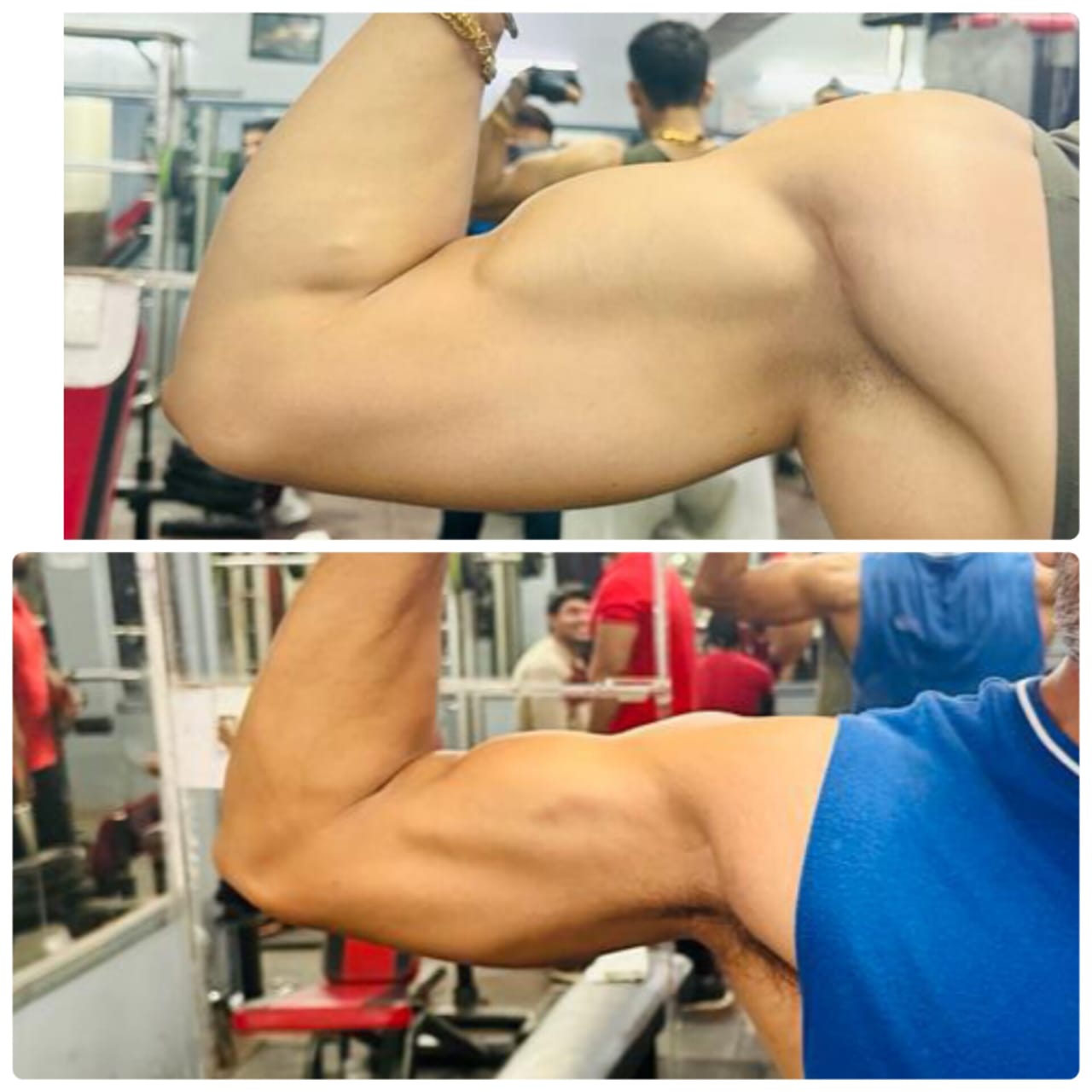
The picture shows two individuals lifting nearly identical weights but with different muscle orientations. It’s intriguing how this robust-looking structure relies on a delicate balance. Bonus marks for identifying my biceps of the two 🙂
Ques: Which of the two individuals do you think is more likely to experience pain/niggle in the shoulder, UCL, or tennis elbow?
Interesting fact: the primary muscle in our biceps, the biceps brachii (the one people show in photos), does not attach to the humerus, contributing to this delicate balance (anything that attaches to shoulder have to have intricate relationship with it.) Consequently, the entire equilibrium of the arm depends on muscles that we often don’t pay much attention to, such as the brachialis, coracobrachialis, and triceps muscles, because of their attachment to the humerus.
Ques: Do you think, both arms would function differently biomechanically, especially during activities like pitching, throwing, or hitting?
Yes.
Ques: Do you think improper balance of these muscles can out extra stress on specific location to cause injuries?
Yes.

In conclusion, we consider biomechanics a superficial aspect; however, it is intricately linked to how our muscles function. Interestingly, this function is directly influenced by our training methods, as shown in the picture. It gets even more complex with multi headed muscles such as the deltoids, biceps, and triceps for obvious reasons.
Ques: Does this answer why we observe so many UCL injuries in baseball pitchers, tennis elbow in fast bowlers, or golfers elbow in many? Could this imbalance be the reason?
Yes…this can definitely contribute to injuries is my submission.
What do you think?
 Umesh Chhikara