
#talent#borntalent#fastbowling#cricketers#sportsmen
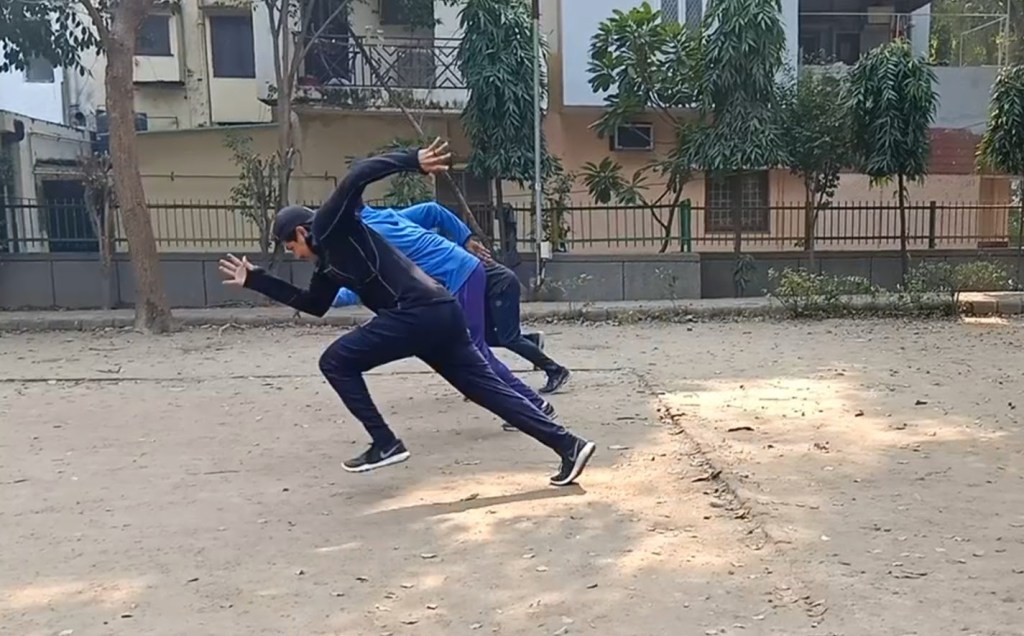
Question: What is talent? How do you define it?
Genetic testing has opened up possibilities for determining talent, but unfortunately, not everyone has access to this kind of testing. As a result, many parents, coaches, and individuals find themselves perplexed and concerned when deciding whether a child should pursue sports or not. My intention here is to provide guidance and help them comprehend the essential elements involved in becoming a successful athlete, as well as the role talent plays in achieving that goal. It’s important to note that while possessing talent can be advantageous, it does not guarantee success; however, it can certainly make the journey more enjoyable and manageable.
An innate athlete encompasses two fundamental aspects:
a) Musculoskeletal system: This pertains to the individual’s body and how it responds to specific movements. Factors such as physical attributes, coordination, flexibility, strength, and overall athleticism contribute to their natural abilities in sports.
b) Mental aspect: The mind plays a crucial role in leveraging the innate movements of the body. This includes qualities such as focus, determination, resilience, strategic thinking, and the ability to handle pressure.
Question 1: How can talent be identified?
Identifying talent can be as straightforward as observing a child who naturally excels in specific movements, surpassing their peers in the same age group. They look different than the rest. Easily spottable in sports activities.
Question 2: How can we identify which sport a child is most suited for?
Identifying the sport that is best suited for a child can be a more intricate process, and seeking guidance from an expert may be beneficial. However, parents can adopt a simpler approach by observing the child’s strengths in the following areas:
a) Leg movements (quickness and agility) – This indicates a potential aptitude for sports like athletics or football, field/court movement sports.
b) Swing movements (such as arm swings) – This suggests a potential affinity for sports like golf, tennis, badminton, baseball, and similar activities that involve swinging motions.
c) Proficiency in both leg and swing movements – This suggests that the child may have a natural inclination for a wide range of sports.
Having said that all the above qualities or physical attributes are need in all sports that is movement based.
Therefore exposing the child to a variety of sports can enhance their abilities and help in making an informed decision. Consider factors such as the child’s talent, the availability of coaching, and the proximity to sports facilities when selecting the most suitable sport for them. At the end of the day everything matters and contribute.
Question 3: How do we determine if we should enroll our child in a specific sport?
When making the decision to enroll a child in a specific sport, there are several factors to consider:
- Biomechanics and Fundamental Movements: If a child demonstrates good biomechanics (or exceptional force/power generation) and exhibits correct movements in the fundamental skills of a particular sport, it may be worth considering their participation in that sport.
- Comparative Performance: If the child displays superior movement, speed, balance, or agility compared to their peers in relation to a specific sport, it suggests that they may be well-suited for that particular activity.
- Child’s Interests and Enjoyment: It is crucial to take into account the child’s interests and level of enjoyment in the sport. If they show genuine interest and enthusiasm for a specific sport, it can enhance their motivation, dedication, and overall satisfaction in participating. Or else one should make an effort to bring this aspect first before putting them in any serious coaching.
- Coaching and Facilities: Evaluate the availability of qualified coaching and appropriate facilities for the chosen sport. Consider whether there are adequate resources and opportunities for the child to receive proper guidance and training in that sport.
Ultimately, the decision should be based on a combination of these factors, keeping the child’s best interests in mind. It is important to strike a balance between their potential talent, enjoyment of the sport, and any potential limitations such as the availability of coaching or facilities.
Question 4: Assuming talent is identified, what guarantees that a child will reach the top?
There is no guarantee that a child with talent will automatically reach the pinnacle of success. Talent alone is not enough. Just as someone born with good health can compromise it by consistently consuming unhealthy food, talent requires nurturing and hard work to flourish.
Talent provides a foundation with certain advantages:
a) Physiological Factors: Talent may be reflected in factors such as the appropriate muscle-to-tendon ratio, a suitable distribution of fast-twitch and slow-twitch muscle fibers for the specific sport, muscle size, and enhanced neural pathways facilitated by myelin sheath development.
b) Central Nervous System (CNS) and Brain: A talented individual may possess a CNS and brain capable of efficiently processing sensory input and generating swift, coordinated motor responses. Hormonal balance and overall health also contribute to optimal functioning.
c) Cognitive Processing: Talented individuals may have a natural aptitude for swiftly processing instructions and information related to their sport.
These factors contribute to the identification of talent, but it is essential to recognize that talent must be cultivated and honed through deliberate effort. Many naturally talented young individuals fade away as they grow older due to a lack of sustained effort and competition.
Analogy: A child scoring high percentage in studies from grade 1 informs us about his natural intelligence in studies. However if he stop studying then we wont score the same. Right?
However, it is relatively easier for talented individuals to develop their skills because they have a natural advantage. Every exercise, movement, and instruction will come more naturally to them. Nevertheless, sustained hard work, consistent practice, and a supportive environment are crucial for any athlete, regardless of their talent level, to reach the top.
In conclusion, while talent provides a head start, it is the dedication, perseverance, and continuous improvement that ultimately pave the way for an athlete’s success.
Examples:
A natural fast bowler doesn’t need instructions for loading, jumping, or landing. He would be loaded with basics.
Or a badminton player would be naturally good with lunges and elastic spine.
Or a tennis player would be blessed with required stamina and powerful arm swing – Roger’s backhand is natural but he had to work hard to sharpen it.
Take another example: Meera has never received any formal training in sports. However when you observe her movements and tricks to balance and move forward, you can tell that she has a natural talent for sports. Even though it’s not her primary interest or focus at the moment but her movements indicate that she has the basic physical abilities of a sports person.
Another example – check the swing of the arm in the end. She learnt it first time and she could throw it with perfection (that I struggle to teach my athletes do it) in 4 throws.
 Umesh Chhikara