
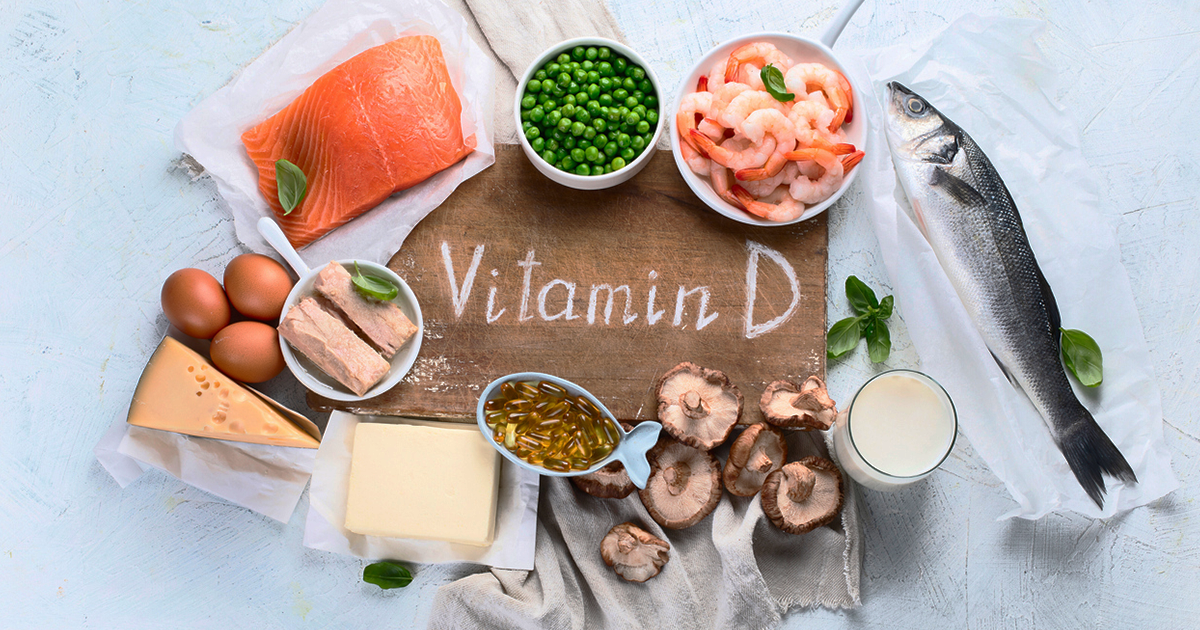
Vitamin D deficiency has captured my attention as a research topic for several years now, as it is becoming increasingly prevalent. It is fascinating to observe how some individuals consider it invaluable, while the scientific community places significant importance on it. I have personally witnessed several cases, including my 80-year-old father, where individuals have lived with a Vitamin D deficiency without experiencing any apparent issues. Although I, too, had a deficiency, I managed to improve my Vitamin D levels over the past year. I am not certain of the changes it brought in my body!
In India, Vitamin D deficiency is alarmingly common, with nearly every person i have met being deficient. However, it is interesting to note that some from this population appears to be relatively healthy despite this high prevalence. I am certain that this ratio holds true for the hardworking labor class individuals in India as well, who are exposed to an abundance of sunlight in their daily lives.
This leads me to wonder about the factors that drive Vitamin D levels. Are the foods listed as sources of Vitamin D on the internet sufficient, or does overall nutrition play a significant role?
There may be multiple factors or reasons for this deficiency, but I am particularly interested in exploring those that are most relevant in my surroundings considering in India we consume a very healthy mix of macros. How we make it (that changes every 60/80km’s), the ingredients we put, and the platter overall makes an Indian diet healthy or unhealthy.
Why Vitamind D is it important?
Here is why as per my readings:
a) regulates autophagy
b) regulates anti-inflammatory pathways
c) regulates transcription of diff chemicals that keep us healthy
d) regulates sleep
Note: Despite considering all the factors mentioned above, one would expect individuals with a Vitamin D deficiency to be unhealthy since these factors are fundamentals of good health. However, that doesn’t seem to be the case, and that’s why the title of my study is as it is.
Could individual variations in genetics, lifestyle, and environment potentially influence the extent to which vitamin D impacts these pathways? Yes, in my opinion as is the case with us Indians.
In my personal experience, despite having sufficient sleep, I still encountered a deficiency in vitamin D. However, my recent blood test results indicated an improvement in my vitamin D levels. It might be worthwhile to investigate the factors that played a role in this improvement, such as dietary changes or increased exposure to sunlight. Or my 2 months of supplementation was enough to bring it for a longer time? I am not sure. It is essential to acknowledge that while food sources and sunlight exposure are the primary means of obtaining vitamin D as per scientists and supplements are recommended by the same community to reach optimal level.
However, it is important to note that my commitment to a healthy lifestyle has been long-standing, and this positive outcome is not a recent achievement. Thus, my inquiry lies in understanding what specific factors contributed to the improvement in my Vitamin D levels and how it has positively influenced various aspects of my well-being.This is a compelling example highlighting the interconnected nature of various factors that contribute to the aging process.
Interconnectedness: I have read that the excess consumption of foods and grains containing deuterium, a heavy form of hydrogen, can bring harm to our body. This, in turn, can impair the body’s ability to efficiently synthesize Vitamin D from sunlight exposure. A deficiency in Vitamin D can subsequently stimulate telomerase activity, which plays a vital role in repairing and replenishing guanine-rich repetitive sequences within telomeres. Telomeres are protective structures located at the ends of chromosomes, and their progressive shortening has been associated with an increased risk of disease and reduced lifespan. Considering this, could maintaining adequate levels of Vitamin D while minimizing deuterium intake may have the potential to slow down the aging process? I do not know.
Let us look into another correlation: Vitamin D and Mitochondrial health
In my experience, I have observed that individuals who consume substantial amounts of rice, wheat, or grains often tend to have a higher body weight, even when their diet includes a variety of vegetables, lentils, legumes, and nuts – the healthy stuff! This weight gain can be directly linked to suboptimal mitochondrial health, which, in turn, is associated with overall health. Scientific studies have shown a strong correlation between mitochondrial health and the development of chronic diseases.
However, the same diet rich in a variety of foods when combined with regular exercise, the results shift, leading to improved mitochondrial health. In this context, the role of Vitamin D becomes a question if it is not obtained in sufficient quantities. It is difficult to determine the exact impact of Vitamin D in this scenario, but it appears that exercise plays a crucial role in optimizing the overall health benefits of a diet.
It is important to note that these observations are based on personal experiences and general trends, and further scientific research is necessary to establish concrete connections and understand the specific role of Vitamin D in relation to diet, exercise, and mitochondrial health.
Two questions arise:
- Could the association between Vitamin D and deuterium, along with their impact on mitochondrial health, be causative factors that contribute to poor health?
The association between Vitamin D, deuterium, and mitochondrial health is a complex topic that requires further investigation. While there is evidence suggesting that deuterium levels and Vitamin D synthesis may influence mitochondrial function, it is important to note that poor health is a multifaceted outcome influenced by various factors. It would be premature to conclude that this association alone is the sole reason for poor health. Additional research is needed to better understand the intricate relationship between Vitamin D, deuterium, mitochondrial health, and overall well-being.
- Could excessive consumption of grains without exercising be a potential factor leading to impaired mitochondrial health, even if overeating is not the primary cause of weight gain in some cases?
The impact of excessive grain consumption without exercise on mitochondrial health is another complex aspect that requires careful examination. While it is true that certain grains can contribute to weight gain due to their calorie content, weight gain and mitochondrial health are influenced by multiple factors, including overall diet quality, physical activity levels, and individual metabolic variations. It is important to adopt a balanced approach to nutrition, ensuring a varied and nutrient-rich diet while incorporating regular exercise to support mitochondrial health.
To maintain optimal Vitamin D levels and improve mitochondrial health, it is generally recommended to follow a balanced diet that includes a variety of foods. While grains can be part of a healthy diet, it is crucial to consider portion sizes, overall dietary composition, and physical activity to support overall well-being. In case of India it is important to consider the combination of foods (platter) and cooking in my opinion.
The above hypothesis is based on the following observations and experiences:
During a two-week stay at an ashram, where the diet primarily consisted of high amounts of vegetables and rice, I experienced symptoms of constipation, despite consuming a very high-fiber diet. The presence of deuterium in vegetables and grains like rice led to speculation that it may have played a role in these symptoms. Or may be the platter overall! Am not sure. I made a comparison between the ashram diet and my usual diet at home, which includes a higher protein intake, fewer grains, and a more diverse range of foods (not repeated as often is it did in Ashram).
The question arises what caused constipation in the presence of high fiber? Could it be the combination of food (platter) or high presence of deuterium in the food served?
My view: Its both! Since the ashram is based out of south India where people consume lot of coconut and banana in their food. They would consume both in different vegetables. However my genetics have evolved in north India where we would not consume coconut at all and definitely not banana in food. So from outside it looked like a wholesome and supremely good diet for microbiome and otherwise but the presence of cocnut and banana perhaps made it worse for me and many others. I look forward to hearing from any expert what they feel, and if there could be any other factor at play here.
Vitamins play an undoubtedly important role in our health. However, rather than solely focusing on each vitamin individually, it may be more beneficial to prioritize a healthy, well-rounded diet that encompasses a proper mix of nutrients. When coupled with regular exercise, this approach makes our bodies to naturally handle the rest of the mechanisms involved in maintaining good health. This has been observed in the case of my father and many others who have enjoyed a healthy lifestyle while adhering to a vegetarian diet throughout their lives, without worrying excessively about specific vitamins or protein intake.
Furthermore, the combination of foods we consume, or the “platter,” holds significant importance. For instance, if we combine high-sugar and high-fat foods like bananas and coconuts with green vegetables, it may counteract the benefits of the greens and potentially lead to negative health effects, as I personally experienced.
Lastly, it is crucial to recognize that we are highly individualistic beings, and our nutritional needs may vary. It is important to approach nutrition on an individual basis. There is no harm in considering supplements; however, it is essential to monitor and evaluate their efficacy. If there is no improvement despite taking supplements, it could indicate underlying factors that need to be addressed. Personally, I am not inclined to regularly rely on supplements alone, as they are meant to supplement our natural processes. Our bodies should ideally adapt, repair, and find mechanisms to restore balance, and supplementation should serve as a means to facilitate this process. These are my personal views on the matter.
It is important to note that these observations and experiences form the basis of the hypothesis and should be further investigated to draw more concrete conclusions.
 Umesh Chhikara