
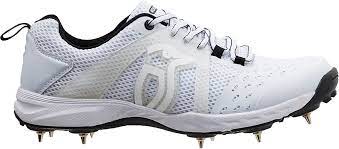
There exists a substantial body of literature discussing the adverse impact of shoes on our biomechanics, leading to a higher risk of injuries. To those who wish to explore this subject further, I strongly suggest reading Christopher McDougall’s “Born to Run.”
Jon Stewart – The Daily Show, has expressed that this book has the potential to uncover the secret to happiness, which may lie right beneath our feet.
During a conversation with a fast bowler in the nets, I inquired about his relatively slower pace that day. The cricketer responded by mentioning that he wasn’t wearing spiked shoes, and as a result, he harbored fears of sustaining injuries. This piqued my curiosity, as I pondered how someone could be apprehensive about something that comes naturally to them. After all, fast bowling is a unique talent, and those fortunate enough to possess it seem to possess all the necessary attributes to execute their bowling action effectively.
Intrigued by this response, I embarked on a quest for knowledge, delving into research on this subject. Here are my findings:
Fact: When we engage in activities such as running or jumping, the force exerted on our legs can be as high as twelve times our body weight. Despite this immense impact, we humans have a natural affinity for these activities, indicating that our feet possess a remarkable resilience. However, there exists a misconception that shoes equipped with cushioning and spikes minimize the strain on our foot muscles.
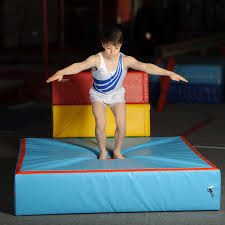
A study conducted by Steven Robbins, MD, and Edward Waked, Ph.D., from McGill University in Montreal sheds light on this matter. The researchers performed a series of tests on gymnasts and observed that the thicker the landing mat (providing more cushioning), the stronger the gymnasts’ landings became. This instinctive behavior reflected their search for stability. Now, let’s imagine a shoe with a thick sole and nails positioned at the bottom, resembling spikes.
(Biomechanics: Even subtle changes in applying mechanical strain may be sufficient to result in injury development.)
Evidence: Cushioning does NOTHING to reduce impact.
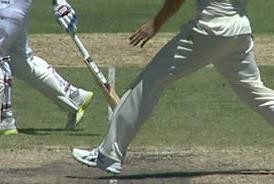
Fact: In the context of cricket shoes, spikes play a crucial role as they offer enhanced traction on the surface, reducing the risk of slipping or losing balance. Hence, the intention of this article is not to criticize the use of spikes but rather to explore foot mechanics and discover approaches to mitigate the potential negative impacts they may have on our feet. It is important to acknowledge that cricket shoes with spikes can promote a heel strike pattern, resulting in prolonged contact time with the ground and placing additional strain on the muscles. Consequently, this can limit the time available for the foot to execute a complete action, from dorsiflexion to plantar flexion.
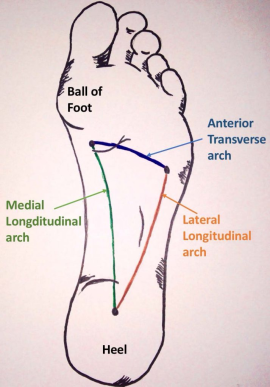
Foot biomechanics play a vital role in optimizing performance and making it energy efficient. The various arches of the foot, including the longitudinal, transverse, and medial arches, provide support to muscles, ligaments, and bones. These are also important to handle the torque forces placed on ankle in different on field activities.
This is how we are designed to move:
The longitudinal arch aids in landing, the transverse arch facilitates plantar flexion, and the medial arch helps distribute force during take-off. However, in cricket shoes with spikes, the extended ground contact time (at heel) resulting from the nails striking the ground places additional pressure on the foot muscles (the torque forces), because the kinetic can’t be stopped. The foot must complete the action – from dorsiflextion to plantar flexion. This necessitates a departure from the conventional running approach and biomechanics, adding extra pressure on the structure as a whole.
Science: At the ground contact, both the increased time of GRF and GRF forces generate an external knee extension together with the hamstrings. The eccentric load put on hamstrings definitely put extra strain on hamstrings specifically ‘biceps femoris’ which exhibits greater activation than the other two semi’s. In addition, because of biceps femoris attachment to sacrotuberus ligament (hip); the entire posterior chain is involved in counteracting the torque forces putting extra mechanical stress on hamstrings. This also suggest that any alterations at pelvis (at SI joint) will have an impact on the biceps femoris.
Spikes:
The size of spikes, how well it fits, the biomechanics of the individual determine the foot’s range of motion, including jumping, landing, and maintaining balance while shuffling. The foot muscles and arches naturally seek compensation since take-off cannot be delayed and the kinetic chain cannot be interrupted. Consequently, the foot is made to compensate at various levels to achieve take-off and withdraw energy from the ground without the full springiness of the natural medial arch.
For instance, fast bowlers often modify their shoes by cutting the leather in front of their big toe to create more space for their foot, in search of stability. However, this alteration hampers the maximum force that can be generated from the ground because we can’t withdraw max force while the foot in the the move. It has to be stable to extract force. This is why, despite changing shoes, players still encounter difficulties in foot movement due to a lack of understanding regarding the underlying reasons for seeking stability. It is crucial to comprehend the reasons behind these challenges and find ways to work with the natural mechanics of the foot instead of relying solely on the shoe. If we are aware of the problem, then we will train to rectify it. Right? We will stay conscious of the facts and train to make it best possible.
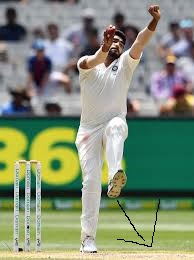
2nd hypothesis: Improper foot mechanics often arise in running when the shoe dictates and directs the foot’s movement rather than the foot driving the shoe. During running, the leading foot should ideally move in a downward, backward, and stroking motion, as opposed to a punching or pounding action that can result from a heel strike. When a heel strike occurs, the ankle, knee, and hip joints can become locked, impeding forward momentum before takeoff. This can lead to weakness (due to overactive musculature) in the ankle, knee, hip, and lower back joints. An important principle for maintaining proper running form is to lean forward.
Irony: Imagine fast bowlers doing weighted squats, or Olympic lifts with such miserable conditions of their feet! I can only sympathize.
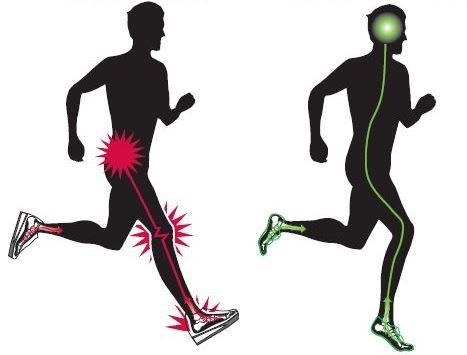
Study: Contrary to popular belief, spikes or footwear can have the opposite effect of reducing impact on joints. Instead, research published in the Journal of Orthopaedic & Sports Physical Therapy indicates that cushioned or protected underfoot surfaces can cause a foot to land with similar impact as on a flat surface, primarily due to fear. When wearing spiked shoes, the foot must adapt to the shoe’s movements, which can result in additional stress on ligaments, tissues, joints, and muscles.
Evidence: Spikes do not reduce impact
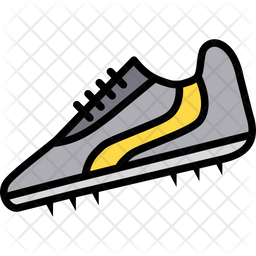
Additionally, spikes create a gap between the foot surface and the ground, making it impossible for the arc’s to hit the ground and withdraw force to its potential. This can result in extra work for muscles, improper foot mechanics, increased impact on joints, and less force withdrawal from the ground.
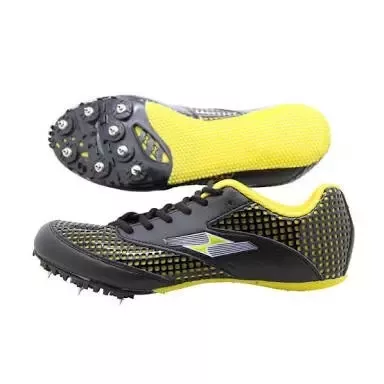
Although they may appear similar, however there is very big difference between batsman and bowler spikes. Batsman spikes, for instance, do not feature nails under the heel (a sprinter’s tool for speed), plus they have spikes in front. Together, these factors reduce the time of ground contact and put less stress on the musculature. However, players who have a heel strike action may still encounter challenges as they are unable to fully leverage the benefits of their arches or adhere to the 4-step biomechanical process. Lack of understanding and training! Proper training can assist cricketers in utilizing their spikes to propel themselves forward, rather than solely relying on them as a means of preventing slipping. #football studs aid footballers
In terms of solutions, it is important to train in a manner that aligns with the demands of cricket while considering the real-time circumstances. Proper training (considering the facts) can not only help to reduce this impact but can also play a huge role in safeguarding a player from injuries. We all understand today that problems at the foot or ankle can cause injuries at the knee, hip, and lower back…not to mention muscular tears.
Also, while spikes play a significant role in the game, companies could explore the development of alternative studs that offer adequate grip on hard pitch surfaces. In the absence of such alternatives, it becomes crucial to minimize the impact of spikes on foot architecture through appropriate training and recovery methods.
Understanding the potential damage allows us to implement effective damage control measures. If we are unaware of any damage occurring, there would be no motivation to rectify or mitigate it. Awareness of the problem is the first step towards finding solutions and taking corrective actions. Without that knowledge, we may continue to overlook or neglect the issue, leading to potential consequences in the long run. Therefore, it is essential to identify and understand any damage that may be happening in order to initiate appropriate measures for correction and prevention.
Coaches should not pressure young cricketers into buying spikes if they do not already wear them. It is not a crucial tool and should only be considered once the athlete reaches a certain level of skill and speed, where slip/skid injuries become more of a risk. Let spikes be a personal choice rather than a compulsory guard, to avoid compromising the athlete’s potential.
To read how this translates into injuries together with wrong training read my research article on the subject
The Science behind weight training & injuries to cricketers!
Umesh Chhikara
Sports Scientist
 Umesh Chhikara
I never even thought of it .
After reading this article I’ve realised that wearing spikes is not important . It depends if the player want to wear them or not . Even when I wear spikes it s not as good as the feel of training shows
Understand the use of spikes – it protects you from fall and it helps you grip the hard pitch surface if you are a bowler or a batsman. If you can manage both with any kind of shoe without compromising your foot mechanics then you don’t need it. Having said that you must look at shoes with studs. These days you have choices from cricket shoe manufacturing companies. Shift to those shoes and see if you feel good. These can also be your training shoes on grass. And then progress to spikes IF you need it.