
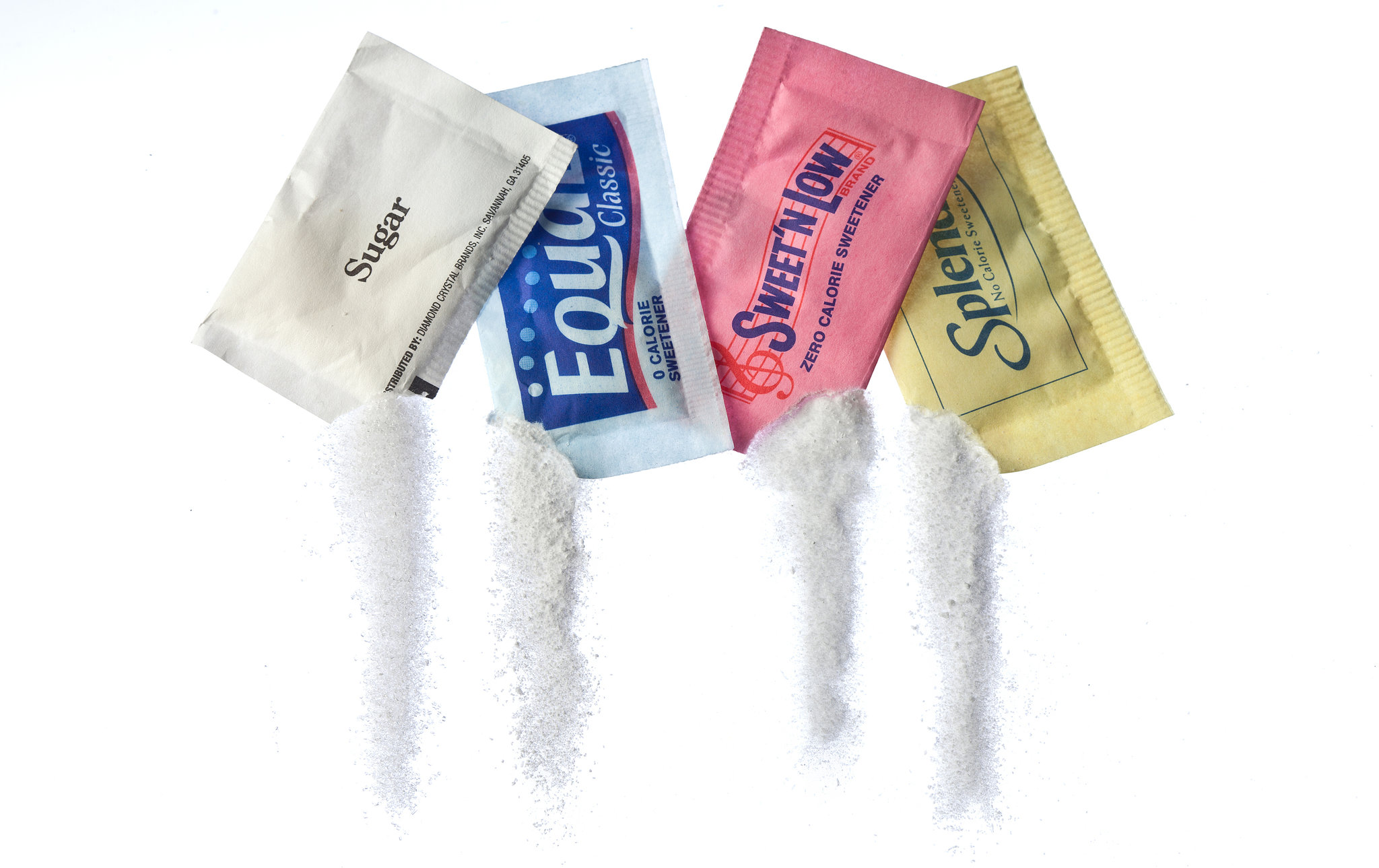
I was reading a book when I came across a reference to research on sweetners. The author summed it up by saying, “the data for artificial sweeteners is unfavourable, although it is not nearly as worrisome as high sugar consumption.”
That pushed me to go and read the actual study. And it was exactly what I suspected – a conclusion drawn from the wrong context, followed by a comparison that made it sound more alarming than it really was.
Why is this important?
Because many of you use stevia or something similar to avoid adding sugar to your tea or coffee. Some of you may have one Diet Coke a day, or only occasionally. If someone in that position reads a headline like this — especially coming from an expert — it is easy to start wondering whether one small tablet of stevia could make them diabetic or insulin resistant.
That is precisely why I felt the need to write this. What you hear is often not the full story. The reality, when you read the research in context, is very different.
1) Where did sweetners get their bad name?
A 2022 human trial published in Cell studied 120 healthy adults who were given common sweeteners like Saccharin, Sucralose, Aspartame, and Steviol glycosides for two weeks.
The study found measurable (not high or many) changes in gut microbiome composition, and in some individuals, modest alterations in glucose response, particularly with saccharin and sucralose.
Headlines followed quickly:
“Sweeteners harm gut health.” “Artificial sweeteners impair glucose control.”
And just like that, sweeteners were pushed further into the “metabolically dangerous” bucket.
2) Why it was not what was told
When you translate the actual dosage used in the study into real-world terms, the picture becomes clearer.
The aspartame group consumed roughly the equivalent of about 5 to 6 cans of Diet Coke per day for 14 days.
Not one can. Not occasional use. Not a teaspoon in morning tea – 5/6 every day for 14 days
Ques: Put the research on the side, is there anybody here who thinks 5/6 cans everyday is healthy regardless of what it contains?
Why to blame sweeteners then?
That context rarely appears in social media summaries. The exposure level matters. Without translating dosage into something relatable, the conclusion feels universal when it is not.
3) Wrong interpretation
Research is designed to detect biological signals at specific exposure levels. It asks:
At X dose, over Y time, do we observe measurable change?
It does not ask:
Is this food inherently bad?
Is small intake harmful?
Should everyone avoid it?
A scientific research measures thresholds and gradients. Public conversation converts those gradients into moral labels – a measurable microbiome shift does not automatically mean disease. A statistical change in glucose response does not equal metabolic collapse.
Most research tells us where biological change begins to be detectable not where catastrophe begins. And importantly, it rarely tells us what happens at lower intakes, because that was not what was tested.
4) My take
Reading research in proper context changes the narrative.
Example: This study does not prove sweeteners are harmless. It also does not prove they are inherently harmful. It shows that at sustained higher intakes roughly several cans daily measurable biological effects can occur in some (not all!) individuals. This NOT saying: if you have one or two occasionally, you are damaging your metabolism.
Research is a tool to understand thresholds, not to create fear. When interpreted carefully, it gives clarity. When simplified into headlines, it creates confusion.
Sweeteners aren’t bad after all. They are biologically active compounds whose effects depend on dose, duration, and individual context like almost everything else in physiology.
Note: Be careful when an influencer quotes research to strengthen his speech or writing. It is often not saying what he claims it is saying.
So when you hear ‘sugar’ is poison; ghee is bad; dairy is unhealthy etc. etc.
Do ask –
to who?
in what consumption?
 Umesh Chhikara