
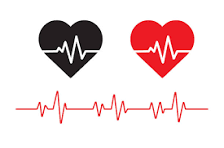
Heart Rate Variability (HRV) is the natural variation in time between heartbeats. It mainly reflects how relaxed or stressed your nervous system is on a day to day basis, not how strong or weak your heart is.
Example:
When you are stressed, your heart beats faster. As heart rate goes up, the time between each heartbeat becomes shorter and more uniform, so HRV appears low. This change is directly linked to how stressed or alert your system is at that moment.
HRV can fluctuate from moment to moment depending on sleep, stress, emotions, illness, or workload. This does not mean the heart is unhealthy. When HRV is used to understand health, it should always be looked at as an average over time, not a single reading on a stressful day.
Heart rate recovery (HRR) shows how quickly your heart rate comes down after physical effort. A heart that can move from a high rate to a calm state quickly is a healthy heart. It shows that the heart knows how to switch off effort and return to rest, which reflects good heart capacity.
Example:
You climb a few floors, do a few quick sprints, or perform any high intensity workout. Your heart rate goes up and you feel out of breath. Once you stop, the time it takes for your heart rate to come back close to your usual resting level, for example around 80 BPM, is called heart rate recovery. If your breathing and heart rate settle down quickly, it means your heart rate recovery is good.
That same capacity is what allows healthy HRV. When people with good heart rate recovery show low HRV readings, it usually does not mean poor heart health. It simply reflects temporary stress on the system, such as poor sleep, mental stress, inflammation, illness, or heavy training. These are short term states, not loss of heart capacity. In real physiology, not numbers on a screen, it is not possible to live long term with genuinely good heart rate recovery and genuinely poor heart health. If recovery is strong, the ability to relax is always present, even if it is not fully expressed every day.
A simple way to understand this is with an analogy.
Think of your heart like a car – Heart rate recovery is how quickly the brakes work once you stop pressing the accelerator. If the car slows down smoothly and quickly, the braking system is strong. A heart that slows down fast after activity is healthy and well controlled.
HRV is more like how tense or relaxed the driver feels that day. Poor sleep, stress, worry, or mental overload can make HRV look low even when the heart itself is working perfectly well. That does not mean the heart is weak or damaged. It only means the system is under temporary pressure.
If someone can move from a fast heart rate to a calm one quickly, their heart has good capacity. Low HRV readings in such people are short term signals, not long term problems. A healthy heart cannot have strong recovery and poor health at the same time. When the brakes work well, the heart always has the ability to relax, even if life stress affects it for a day or two.
This is why heart rate recovery is a better marker of heart health, while HRV mostly reflects day to day stress and load on the system.
Stairs climbing experience that devised the term – Heart Rate Adaptability for me and why in my view it could be the better measure of health:
 Umesh Chhikara