
Torn UCL to Baseball Pitchers! The Unseen Recipe for a Surging Epidemic
I have a very interesting discussion on this 2 years back and I may have a research to back up my hypothesis today:
The statistic is staggering: roughly 36% of all active MLB pitchers have undergone Tommy John surgery. The number climbs yearly, despite the world’s best sports science and medicine.
We keep asking, “What’s wrong with the elbow?” But what if the elbow is just the site of the breakdown, not the cause? The answer lies in a fundamental flaw in how we view the body’s structure under stress.
The Foundation: A Lesson from the Feet, Backed by Data
To understand the elbow, we must first look at the foot. The metatarsal bones are supported by a network of small, intricate muscles. You can build massive thighs and powerful glutes, but the muscles supporting your foundation remain small.
This isn’t just theory; it’s measurable fact. Research on second metatarsal bone stress found that:
https://onlinelibrary.wiley.com/doi/10.1111/sms.70152
- Running just 10% faster increased bone stress by 4%.
- Carrying a load of just 10% of body mass increased bone stress by 3%.
This exposes a critical flaw in “harder is better” training. These small structures have a capacity. When we push past it with more speed or load, the stress is transferred directly to the bones. The foundation cracks under the demand.
From the Feet to a Torn UCL
Now, apply this exact logic to the most talked-about injury in sports: the Torn UCL in baseball pitchers.
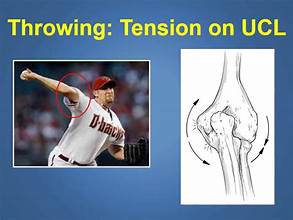
The UCL ligament is a primary stabilizer, dynamically supported by smaller forearm muscles. In the gym, you lift heavy in a stable, controlled motion. But a 95-mph fastball is a different beast entirely. This is where conventional wisdom fails.
“The Force is With the Movement”
Pitching isn’t a push; it’s a violent, full-body whip. The force isn’t generated from a stable position; it’s with the movement. The entire structure must balance itself in motion, a task that demands perfect structural nuance, not just raw power. The force from the legs and core rockets upward, demanding instant, precise stabilization from the smaller forearm muscles. When fresh, they are perfect shock absorbers. But what happens after hundreds of throws?
The Critical Ingredient: A Tired and Unbalanced Structure
A tired musculature is an overactive and inhibited one. Some muscles tighten and seize up, while others shut down. You cannot perform your best—and certainly not repetitively—with such an imbalanced structure. The real danger is this: The force is with the movement, delivered by a structurally misaligned system. This is why no one tears their UCL on the first throw. It happens after thousands. It’s a death by a thousand cuts, where the cumulative load on a fatigued system finally exceeds its threshold. The small muscles max out, and the UCL is forced to take the hit.
The Proof is in the Pitching
If it were just about raw strength, the biggest bodybuilder would be the fastest pitcher. So, let me ask you: if you look at a lean pitcher and a powerfully built, muscular pitcher, can you tell who will throw faster? The answer is a resounding no. We see this paradox in every team. Speed is a product of efficient movement, not just muscle mass.
The Final Seasoning: “Relaxed Musculature”
The solution isn’t more strength on a faulty foundation. It lies in the state of the musculature itself. The key is relaxed musculature—a state achieved through dedicated, full-body recovery sessions including mind relaxation. This is how we bring structural integrity back. It resets the overactive muscles and reactivates the inhibited ones. A pitcher with a fresh, supple structure has a system where every muscle is ready to contribute its designated effort. They start from zero, not from a deficit. A fresh structure can handle immense load. A tired one is an injury waiting to happen.
The conversation must shift from “How strong is he?” to “How recovered is his structure?” The future of performance and injury prevention lies not just in the weight room, but in the recovery room. It’s the secret ingredient we’ve been missing all along.
 Umesh Chhikara