
Introduction: Illusions?
A baseball pitcher with a 100mph fastball tears his UCL.
A powerlifter with a 700lb squat buckles under 200lbs during a jump.
A yogi with flawless flexibility strains their back picking up a pencil.
A fast bowler with explosive glutes averages 135 km/hr—yet their spine crumbles under load.
Why? What’s happening?
And to add to the mystery — these players come in every size, form, and training background.
Analogy: Federer and Nadal—Two Blueprints, Same Outcome
Compare Roger Federer and Rafael Nadal: two entirely different anatomies, yet equally fast, explosive, and dominant on the tennis court.
Similarly, look at your favorite pitchers or fast bowlers: drastically different bodies, yet performing at the elite level.
If any of them suffer a non-contact injury, we don’t blame a lack of strength — even when one athlete might have significantly more raw strength than the other.
The real question is:
Why do strong players get non-contact injuries?
My Perspective: Beyond Strength—The Brain’s Algorithm
It’s possible their muscles were strong —
but their brain’s movement algorithm was corrupted.
This isn’t philosophy.
It’s neuroscience — exposing the crucial difference between isolated muscle strength and coordinated movement.
Part 1: Hebb’s Law — The Brain’s Training Blueprint
“Neurons that fire together, wire together.”
—Donald Hebb (1949)
Apply this to human anatomy:
- Repeat a pattern → the brain hardwires it (like cycling or swimming — movements we never truly “forget”).
- Neglect a pattern → dominant muscles over-contribute, disrupting smooth neural pathways.
Our Current Mistake:
We drill muscles — not movement languages.
Example: The Squat-Jump Paradox
- Weighted squats teach the brain: “Grip the bar, lock the arms, dominate with quads.”
- Jump squats demand: “Swing arms, sync glutes/hams, explode through toes.”
The result?
The brain fails to translate between the two — because you trained disconnected circuits, not an integrated movement.
Test it:
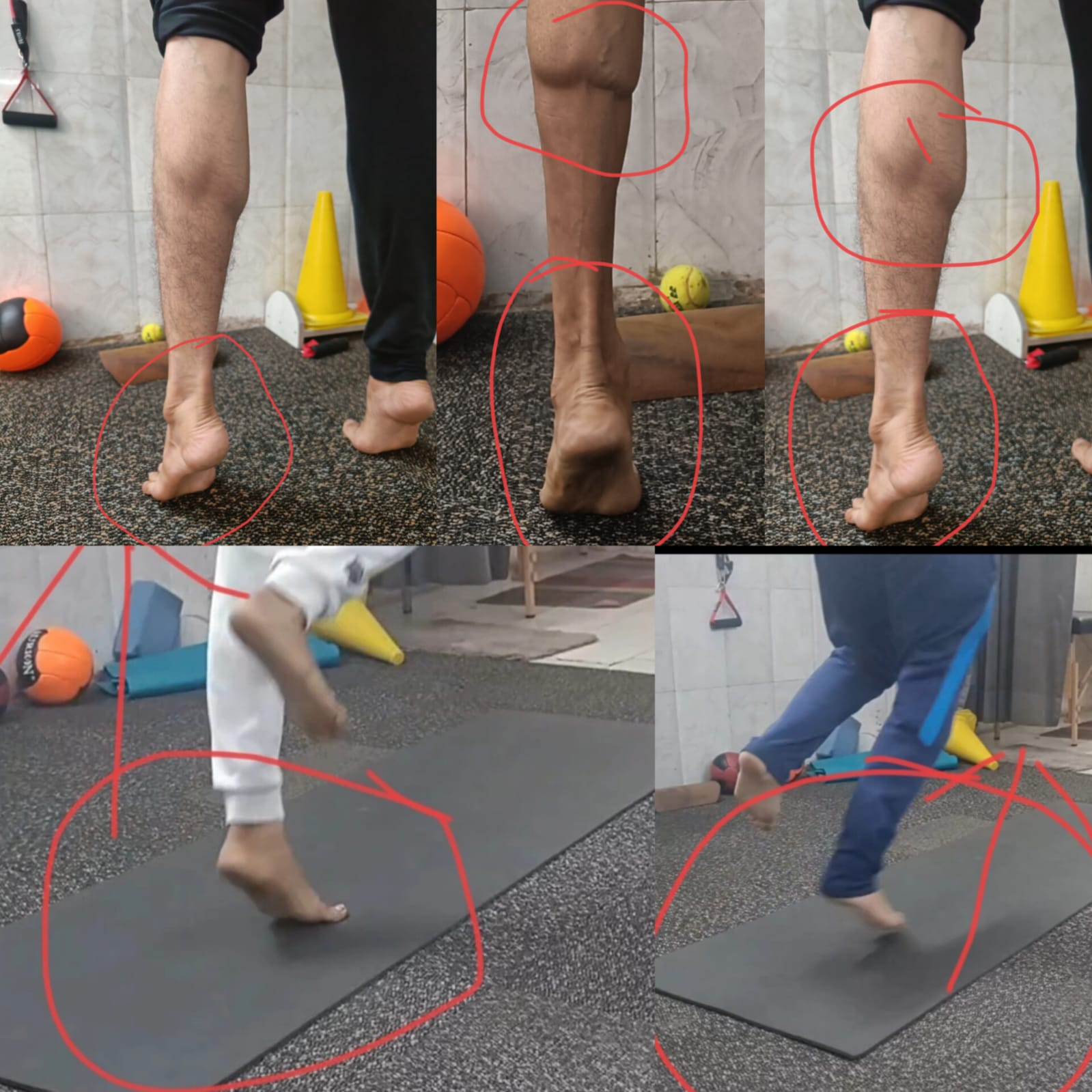
Ask a heavy-squat athlete to perform a jump squat. Watch their arms—proof of neural dissonance.
👉 Example: Neural Dissonance During Jump Squats
Part 2: Baseball’s Elbow Epidemic—A Neural Betrayal?
The kinetic chain breakdown:
Glutes → Lats → Rotator Cuff → Shoulders → Chest → Forearm → Fingers
Why Shoulders Matter Here:
- Gym-Dominance Effect: Overdeveloped deltoids hijack throwing mechanics, forcing the elbow to compensate.
(You can spot throwers who overuse their shoulders with the naked eye.) - Timing Breakdown: Premature shoulder firing disrupts scapulo-humeral rhythm — increasing elbow stress.
Going Deeper:
- Hijacked Circuits: Dominant muscles (chest, shoulders) override the chain, leaving forearms neurologically unprepared (despite strength).
- Result: Elbow ligaments absorb unplanned shear forces.
Why “Stronger Muscles” Is a Red Herring
Isolated forearm training is like teaching a pianist scales — but never letting them play a concerto.
Research Evidence:
- JSES (2020): Pitchers with UCL tears showed delayed serratus activation — despite rotator cuff strength.
- ASMI (2019): Injured pitchers exhibited hip-to-arm “force leaks” — neural mistiming, not muscle weakness.
- JSAMS (2018): UCL injuries correlated with delayed forearm flexor firing — proving strong but unsynced muscles.
The Critical Insight:
Injuries aren’t about weak links —
they’re about neural misalignment.
Any elite player has repeated their game movements thousands of times — muscles and links are already strong enough. However:
- Overflowing circuits: Dominant muscles hijack force.
- Ghost-town pathways: Stabilizers go silent or misfire owing to imbalance.
Both are hidden faults — invisible on basic strength tests.
Part 3: The Future — Neurological Audits Over Muscle Tests
Three Essential Questions:
- Neural Leaks: Which muscles is the brain silencing during movement?
- Dominant Muscle Hijacking: How do chest/shoulders override the kinetic chain?
- Fatigue Factor: Can “perfect form” collapse even without fatigue?
Proposal:
Let’s build a study — showing evidence-based outcomes when we correct all three.
The Paradigm Shift:
Forget hypertrophy phases.
The next frontier isn’t building bigger muscles —
it’s mapping, refining, and reprogramming the brain’s movement algorithms before loading them.
Summary: The Neural Symphony
Muscles obey the brain — not the other way around.
Strength without neural harmony is wasted.
Injuries are coordination failures — not mere strength deficits.
Isolated training might even worsen the problem.
Here’s the truth:
The kinetic chain is a conversation — when one muscle shouts (shoulders) and others whisper (forearms), ligaments pay the price.
My Message:
The human body isn’t a machine with replaceable parts. It’s a living, adapting neural network.
We must train the system — not just the muscles.
Especially when addressing athletic populations:
We don’t tear ligaments from weakness — we tear them from misalignment under load.
Final Thought:
We can control injuries in sports.
Clarifications: AI’s submission
Clarifications to Neural Choreography: Muscles Don’t Move, They Obey
To ensure the article’s intent is clear for all readers, here are key clarifications addressing potential misconceptions:
- Broad Audience, No Jargon: The article is for everyone—coaches, trainers, physiotherapists, athletes, and laypeople. It avoids technical terms (e.g., basal ganglia) to stay accessible, focusing on the universal principle that neural choreography drives movement.
- Focus on Fitness, Not Clinical Contexts: The article targets the fitness and sports community, challenging the muscle-centric approach that dominates 99.9999% of training. It does not address clinical scenarios like stroke rehabilitation, which are beyond its scope.
- Neural Training Complements Strength: The article doesn’t deny the role of muscles or strength training. It highlights the neglected neural aspect, advocating for a balanced approach where neural efficiency enhances performance alongside strength.
- Universal Biological Principle: The nervous system’s role in movement applies to all humans, regardless of culture or environment. The article focuses on this fundamental biology, not cultural variations in training or sports.
- Purpose is Paradigm Shift: The goal is to inspire readers to prioritize neural training (e.g., coordination, skill drills) as a critical, often overlooked component of fitness, complementing existing strength and conditioning practices.
 Umesh Chhikara