
Why Intermittent Fasting do not help you lose weight?
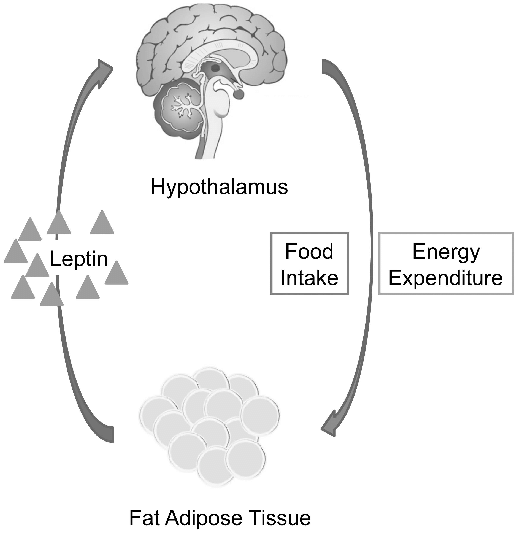
To be able to understand this, we must understand the role of the hypothalamus in regulating food intake.
A lipostat is a regulatory mechanism in the body that helps maintain stable levels of fat or lipid stores. It involves feedback loops between fat cells (adipocytes) and the brain, particularly the hypothalamus, to regulate appetite, metabolism, and energy expenditure in order to maintain a balance of fat stores within a certain range. When fat stores are high, signals are sent to decrease appetite and increase energy expenditure, while when fat stores are low, signals are sent to increase appetite and decrease energy expenditure, thus helping to maintain overall lipid homeostasis.
(Leptin is a hormone primarily produced by fat cells (adipocytes) and plays a crucial role in regulating energy balance and body weight. It acts as a signal to the brain, particularly the hypothalamus, to inhibit hunger and regulate appetite.)
How does this explain Intermittet fasting or say fasting of 48/72 hrs do not directly impact weight due to the presence of the lipostat set point?
Well, say your lipostat is set at 25% body fat. Regardless of how much food you eat; your body will make sure that you maintain this much fat in adipocytes. Lets look at two examples:
1) Wedding/holidays: we end up eating much more than our regular food. However, if we measure our weight after a week; it comes to same. We might feel bloated after 2/3 days of regular over eating during this time but at the end of a week; we find the weight same.
2) Second scenario: we start skipping breakfast (intermittent fasting). In contrast to what brain did in the first scenario; in this case, our brain would bring down the basal metabolic rate causing less burn.
In both scenarios our brain tries to maintain 25% body fat. However, if we persist, say with overeating, then our brain would increase the lipostat set point. Some may argue that this doesn’t happen when we cut down eating as we don’t lose weight. We do initially. However, it plateus after a while because our brain is always trying to protect us and keep maintaining energy expenditure and fat set point.
Therefore weight regultion is more than just a simple balance of calories for many in my study.
The concept of the lipostat set point emphasizes the intricate mechanisms controlling hunger, satiety, and metabolic rate, which are influenced by various factors beyond short-term fluctuations in calorie intake.
Therefore, the real reason why we don’t lose weight in fasting is lipostat and not our compensatory eating afterward to make it up for lost calories. Right?
Does this also explains why people, besides skipping a meal permanently fm their diet (while not eating extra in subsequent meals), do not lose significant weight as calorie concept would explain?
Solution?
Exercise, timing of the meal, and perhaps improvement in platter
 Umesh Chhikara