
I originally wrote this article on 1st December but adding this section today on 12th January after 1 month study with few boys. I will have to write a separate article on this and how transformation happened however, this video will add lot of value to what I am saying below in the article and hopefully make people understand why I am saying what I am saying below
OK. This potentially makes me the first person (as usual) to speak on this subject in this manner. However, please correct me if I’m wrong. There is an article quoted by someone claiming that “exercise is useless” for weight loss, written by Herman Pontzer and his team. This idea is also shared and agreed upon by some prominent figures in the field. It’s an impressive body of work by Herman and his team, with much to learn from it. It certainly changed the way I think about calorie expenditure and many other factors.
That said, as a seeker of knowledge, I’m curious about how things play out in my own experience. In my environment, athletes or individuals are clearly losing weight when I train them while eating ad libitum. Even if we accept that good training regulates our metabolism, the calorie deficit they need to achieve weight loss doesn’t seem to match what is suggested in the research. So, am I living in a completely different world where I can make my athletes lose weight while they eat the same food, or is there something else at play here? I understand that it’s the cumulative burn over time that creates the calorie deficit; however, as Herman explains on many occasions, that burn is driven by exercise.
Here is the article: https://www.cell.com/action/showPdf?pii=S0960-9822%2815%2901577-8
I’ve delved into Herman’s research on the Hadza tribe, read his book, and listened to some of his podcasts. Brilliant work. I had so much learn from their research. However I disagree with the hypothesis that exercise is an ineffective tool for weight loss. And its not just him there are several researches showing the same. But then what am I missing here? Why people under me are losing weight…sometimes, significantly in as less as one week? There has to be some physiology behind it because calorie deficit doesn’t equate with weight loss. While I keep chasing that, here are my views on some part of his research
The Hadza tribe, like any society, has adapted to its lifestyle. Regardless of the amount of physical activity they engage in, it’s a routine part of their lives, comparable to the regular work of a farmer, rickshaw puller, or a young boy carrying another person on his shoulders up mountains on religious sites in India. This does not translate to increased food consumption. I do not need to go to Hadza tribe. I see people who are putting in 10 times more physical effort than an office goer and yet eating almost similar amount of calories or even less in some cases.

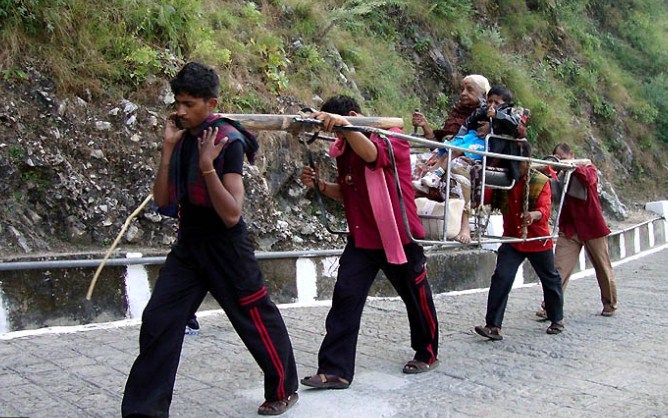
Consider a young man, known as a ‘pithoo,’ who carries a person in a basket, hangs it on his head and shoulders, and ascends and descends mountains in a single day.
Question: Does this mean he consumes more food? Or does it suggest he burns more calories than his peers due to his strenuous work?
Answer: Initially, yes. He burns more calories than others in his age group, losing weight while maintaining his regular food intake.
Note: I understand this is anecdotal, and I’m not using these examples to support the same point Herman made with the Hadza. Rather, I’m using these examples to highlight what I observe in real life and how I interpret observational studies.
Fast forward a decade, and the “pithoo” has accumulated fat around his belly while continuing the same work and dietary habits. His BMR definitely hasn’t changed because he’s been eating the same food and his physical stress remains the same. Ideally, he should not be accumulating extra weight, but he is.
Question: What happened?
Answer: His body adapted to the workload, reducing calorie expenditure over time—becoming more efficient, so to speak—burning fewer calories to do the same work. Despite maintaining the same food intake, he gained weight.
Question: But then, why don’t the Hadza people get fat?
I’m not entirely sure, but the only explanation I can think of is that they aren’t fed as regularly as someone in a civilized society. No matter what happens, someone in our society will get food. This can’t be said about the Hadza. Additionally, the lack of food processing might make it less readily available for the body to absorb, particularly for those born to digest it.
Question: Does this imply that exercise (carrying people up and down the mountain) does not burn calories?
Question: Or could it mean that his adapted body burns fewer calories than before (stressing the same musculature), resulting in weight gain despite unchanged food intake? For example, why do bodybuilders gain fat when they stop training, and why do many struggle to lose it for the rest of their lives?
Question: That begs the question—if a bodybuilder quits bodybuilding and gains, say, 10 kilos over a few years, wouldn’t they lose weight if they started training again, eating the same food?
Answer: They would initially lose weight, but then plateau. After that, they’d likely require nutritional intervention. But the weight loss did occur—what’s the cause? #exercise
Question: Alternatively, could insulin resistance be a factor, leading to a lower basal metabolic rate and increased fat storage?

People who carry “kawar” lose weight despite consuming a very high-sugar and fruit-heavy diet, often eating much more than they would otherwise. Yet, they still lose weight! Why? Because they walk over 200 km on average, carrying Ganga water on their shoulders, just as the picture shows. Quite strenuous, right?
Question: Would they lose weight every week if they did this for 4 weeks straight?
No. Their body would adapt, just like with anyone. #noprogressiveloading
Question: But would they lose weight the following week if they walked half the distance but at an increased pace—varying their pace?
Not sure.
Question: And would they lose weight again the next week if they cut down the distance by another half, but this time jogged?
Not sure.
Question: Is the calorie burn caused by exercising—walking or jogging?
YES.
The concept of constrained total energy expenditure is valid, but there is a second aspect that can be tweaked: metabolic adaptation to any activity. Also when I exercise, I’m demanding more fuel. The breakdown of glycogen in the muscles burns calories too. Likewise, the breakdown of glycogen in the liver to supply glucose burns calories. However, this burn might fall under the “liver quota” in the burn matrix, even though it’s induced by exercise.
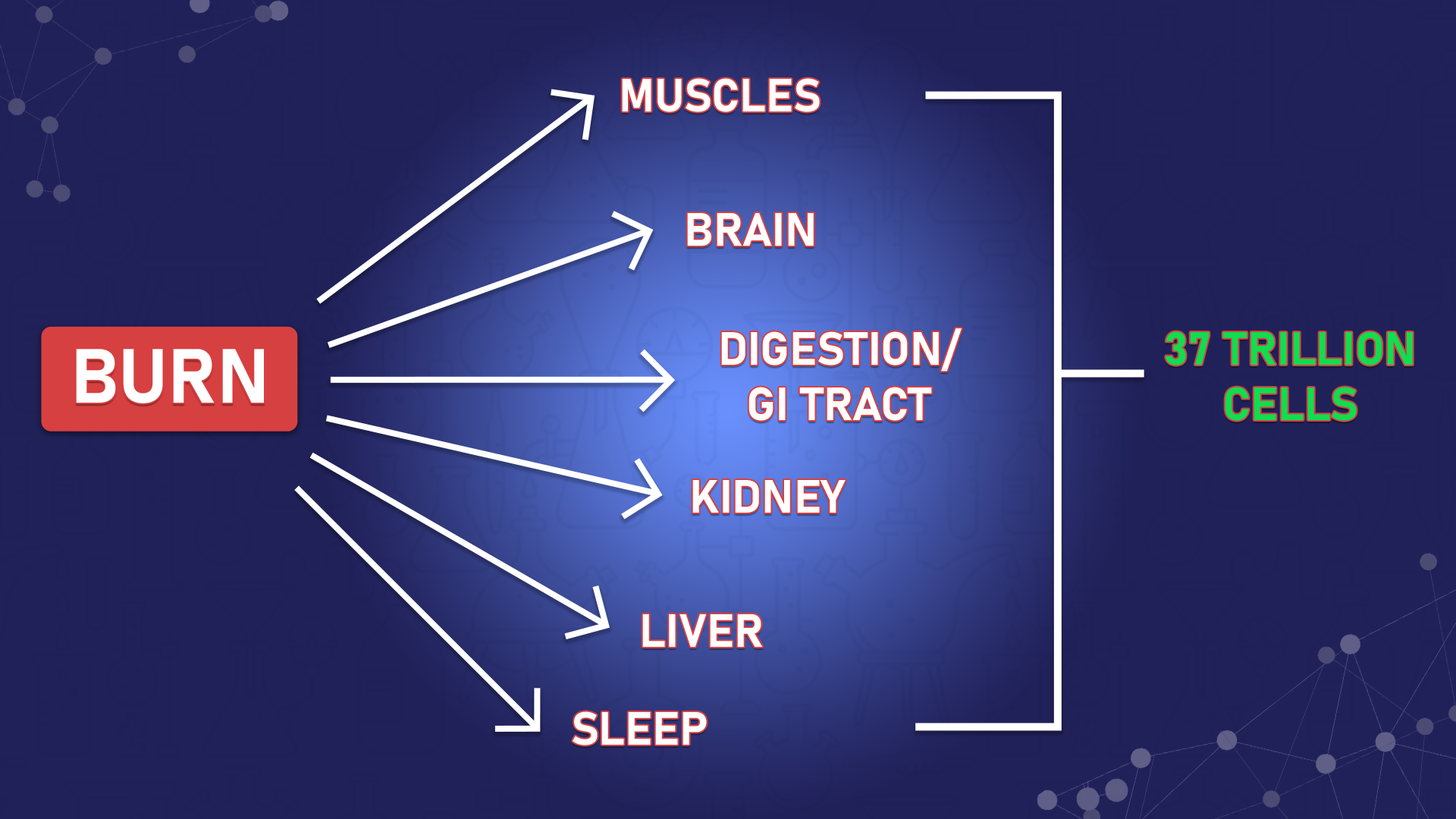
We lift heavy weights to increase energy expenditure while building muscle mass. This should not imply that lifting lighter weights won’t impact our body weight. It highlights the importance of progression in human anatomy.
Conclusion: Exercise may not continue burning calories indefinitely. It will plateau, after which a change in stimulus will be necessary. That said, exercise aids in calorie burning under all conditions and helps maintain a flexible and healthy metabolic system.
Nutrition applicability varies across societies. A significant portion of our population consistently consumes the same foods throughout their lives, yet many lead healthy lives as a result.
I’ve seen athletes squeeze out weight loss when they start training while eating the same foods they always do. But can they keep losing weight over the course of a year? Yes, if they continue changing the training stimulus and are carrying extra weight. No, if they persist with the same training and food.
 Umesh Chhikara