
Total Burn = total energy consumed at various levels in our body
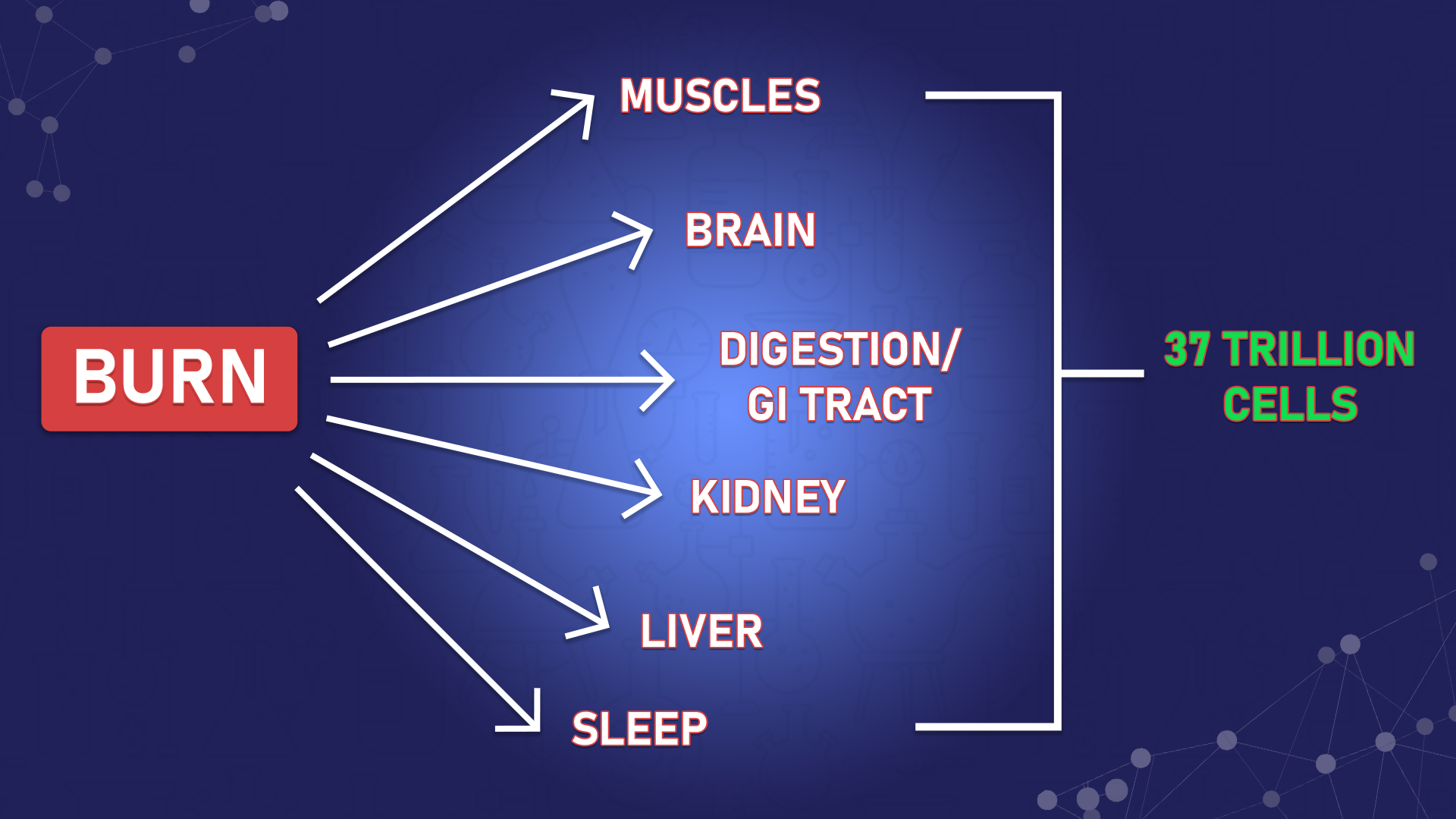
Note: It’s important to recognize that our body burns calories at different places, and muscles contribute only a fraction to this overall process. So don’t break your bones!
First, let’s grasp a few key terms:
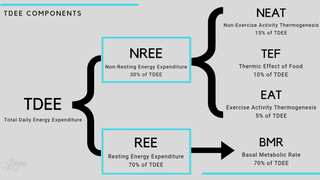
BMR: Basal Metabolic Rate – the calories expended during basic activities.
NEAT: Non-Exercise Activity Thermogenesis – the calories burned outside of formal exercise, like during sleep, meals, or casual activities.
TEF: Thermic Effect of Food – the calories used up while consuming and digesting food.
FAT GAIN = Total calories consumed – Total calories expended
Note: Not all calories are created equal, and not all can be efficiently expended if your metabolic health isn’t optimal.
FACT: Our body is intelligent – if it senses less fuel, it adjusts its burn rate. And as the equation suggests, lowering BMR doesn’t facilitate increased expenditure. Eating less is not a solution for many.
Catch: But we need to boost both BMR and overall expenditure. This is tricky because raising BMR may require us to consume more. But we’re often advised to eat less for fat loss!
Q: What if you exercise more? Does that lead to more calorie burning?
Ans: Yes, but solely increasing exercise (without adjusting other factors) will only yield a marginal increase. The contribution from muscles to the overall burn remains relatively constant. #science
Q: So, what’s the solution?
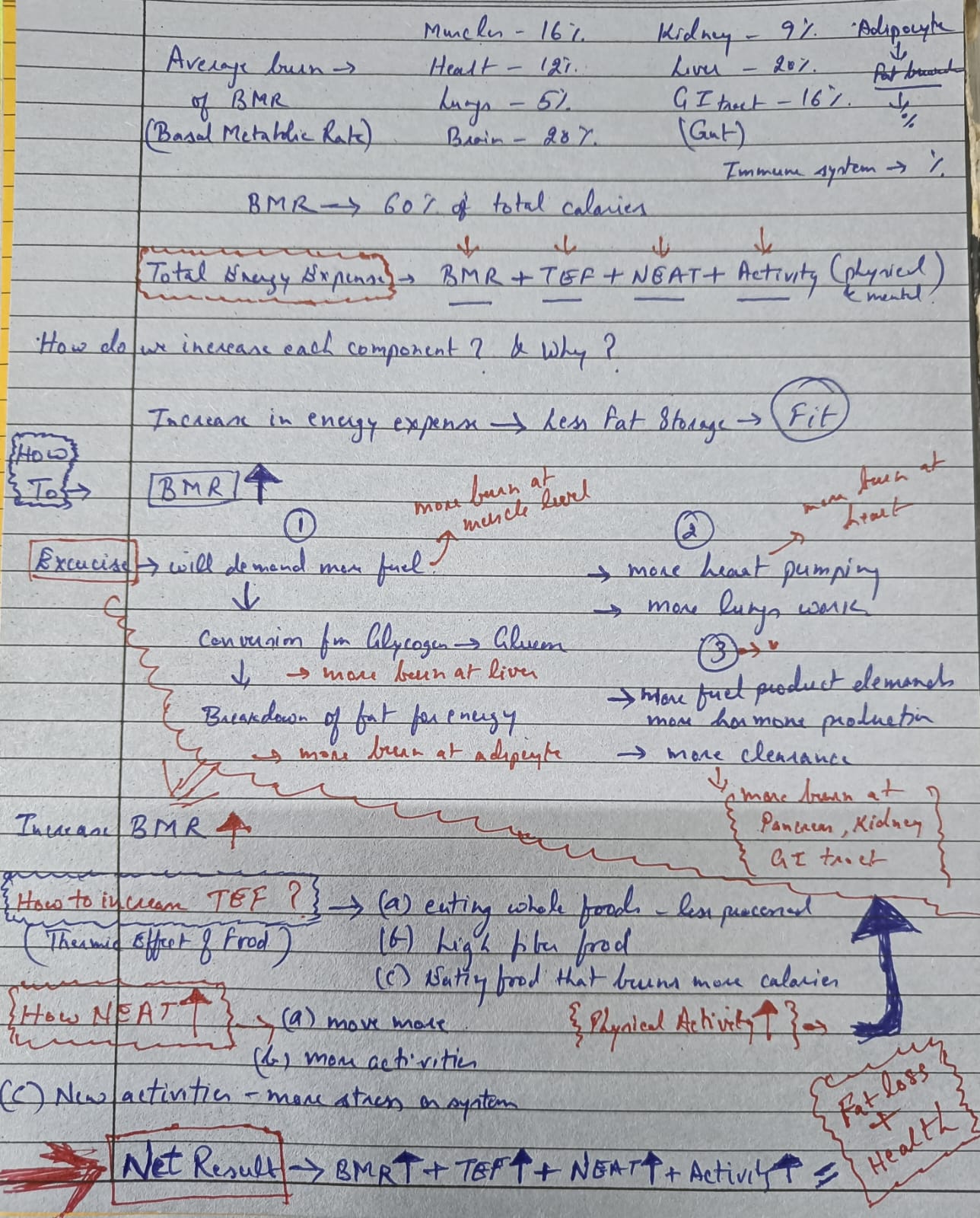
Ans: We need to focus on burning calories at multiple levels. While BMR accounts for 60%, the remaining 40% is still at play. How about leveraging it? Extra exercise can contribute to this (under the activity category), but its only one part of the equation as you can see.
Let’s divide individuals into two categories to better understand this:
a) Those who don’t exercise at all – For this group, exercise can have a cumulative impact across the spectrum, as illustrated in the chart.
b) People who engage in daily exercise/physical activity but still carry excess weight and not losing it:
For these individuals, their current exercise routine evidently isn’t sufficient to tackle the surplus weight. There could be several factors at play in these individuals:
– Insulin resistance, leading to increased fat storage and a lower BMR.
– Inadequate energy intake from food, further lowering BMR.
– Consumption of processed or liquid-heavy (e.g., juice/smoothie) foods with high calorie content but low TEF.
– A sedentary lifestyle beyond exercise sessions, resulting in minimal NEAT burn.
Logical Solutions:
a) Modify dietary choices, meal timing, or portion sizes.
b) Increase movement. Increase NEAT expenditure.
c) Opt for whole foods and incorporate fiber to boost TEF.
d) Change exercise to add more stress. For instance, if you typically walk, incorporate brisk walking intervals.
By understanding and addressing these aspects, we can navigate the complexities of calorie expenditure and achieve more effective weight management.
 Umesh Chhikara