Many times, when players come to me with persistent pain, they have already visited a doctor and undergone necessary scans or tests. It becomes confusing for them (& doctors) because the pain persist post practice.
Analogy: We understand that calcification in our arteries can lead to a heart attack. Initially, a plaque forms and is often detected only as inflammation in scans, which is not considered dangerous. Over time, however, it can progress to calcification, which poses a risk. Unfortunately, we cannot determine the damage caused by a plaque before it becomes calcified because it is only showing as inflammation – something minor.
Similarly, injuries don’t typically occur suddenly. They are usually the result of a gradual buildup, unless they are caused by direct contact or accidents. This buildup occurs through consistent practice and training. It’s not as if one morning, out of nowhere, you wake up with an injury. You’ve essentially contributed to the development of that injury.
Example: A player pulling his hamstring while chasing the ball on the field in recent IPL.
Another interesting one and is apt for this post:
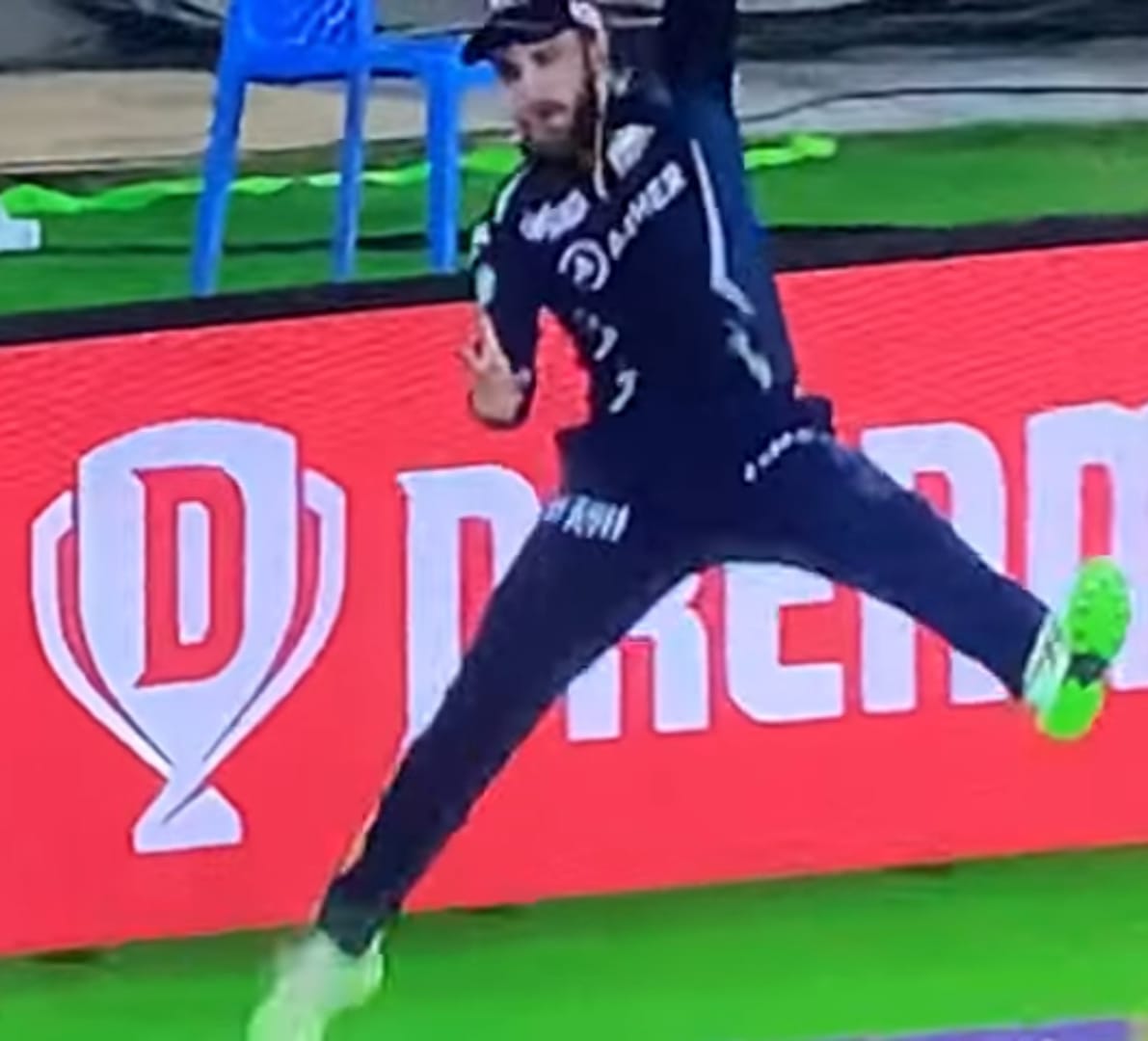
Kane Williamson suffered a ligament tear as a result of a beautiful jump and landing during the previous IPL season. While it’s accurate to attribute the injury to knee valgus, the root cause lies more in muscular factors than in biomechanics. This type of injury typically occurs when a muscle, for some reason, becomes incapable of handling a load that it would normally manage without issue.
In terms of biomechanics, Williamson’s landing technique was nearly flawless. The initial contact of his landing foot and its subsequent gradual deceleration exemplify proper biomechanics of landing. When a foot is positioned perfectly upon landing, it inherently places the knee in a correct (& hip leading to back) strong biomechanically correct alignment. While the injury caused because of valgus position; but it stemmed from the muscles being unable to bear the load. The occurrence of such an injury to a remarkably fit and athletic cricketer underscores the nuances of training and a good warm-up.
Ques: Are these injuries preventable?
Yes
In reality, a lot happens before a muscle or ligament gives in and causes an injury. However, we often fail to understand the warning signs or minor discomforts, commonly referred to as “niggles.” If we did recognize these signs, we could take precautionary measures and focus on correcting underlying issues rather than waiting for a full-blown injury to occur. Our aim should be to address any uneasiness, tightness, or soreness by understanding the cause.
We think we do this, except that we don’t!
The current practice of “prehab” often involves massages or releasing techniques. However, these approaches are insufficient because they only provide temporary relaxation and tension relief in the muscles. They do not address the root cause, which could be related to alignment, biomechanics, or improper warm-up routines. Without addressing these underlying issues, athletes would require such services on a daily basis. It’s no wonder that physiotherapy or massage beds are always occupied.
In conclusion, it is essential to recognize that injuries have a progression and are not solely the result of a single event. And in most cases, it is training, warm up, and lack of proper recovery.


 Umesh Chhikara