
FAT – where and why do I store it?
Fat is primarily stored in adipose tissue or adipocytes, which can be found in various parts of the body. Subcutaneous fat is found under the skin and provides insulation from heat and cold. Visceral fat is packed around internal organs and provides protective padding. Fat can also be found between muscles, within bone marrow, and in breast tissue.
It is important to note that targeting fat at a specific location through exercise or other means is not possible. Many people mistakenly believe that targeting specific areas, such as the abs or sides, will lead to fat loss in those areas. However, fat loss follows a sequence that cannot be altered or controlled.
Individuals who are overweight tend to have fat deposits in various parts of their body, including around the abdomen, which tends to have a high concentration of adipocytes. It is important to view excess fat as a storage room in your body, much like a closet or cupboard where you store items. Regular physical activity, along with a balanced diet, can help promote overall fat loss and improve overall health.
In my experience, fat is burned in the same order it was stored. Typically, the first site of fat deposition is the abdomen/sides, followed by other areas such as the neck, face, hips, and thighs, depending on the individual. Women tend to have higher fat stores in the thighs or hips compared to men, while some men may store more fat in their face or neck.
When we consume food, a portion of it is immediately processed for energy or burned, while the remainder is stored as fat in adipocytes (with some stored as glycogen in muscles). During periods of fasting or when we are not eating, the body uses these fat stores for energy, similar to a car using fuel from its tank. This state of fat burning continues until we eat or sleep.
However, if we consume more calories than we burn, excess fat can accumulate in our bodies. Suppose we deposit “x” amount of fat per day, but only burn “1/2X” per day. In that case, we end up accumulating fat in our bodies, much like how we pile up clothes in a closet without removing old items. This can lead to insulin resistance and other metabolic issues, compromising fat burning and leading to high blood sugar, blood pressure, and other health concerns.

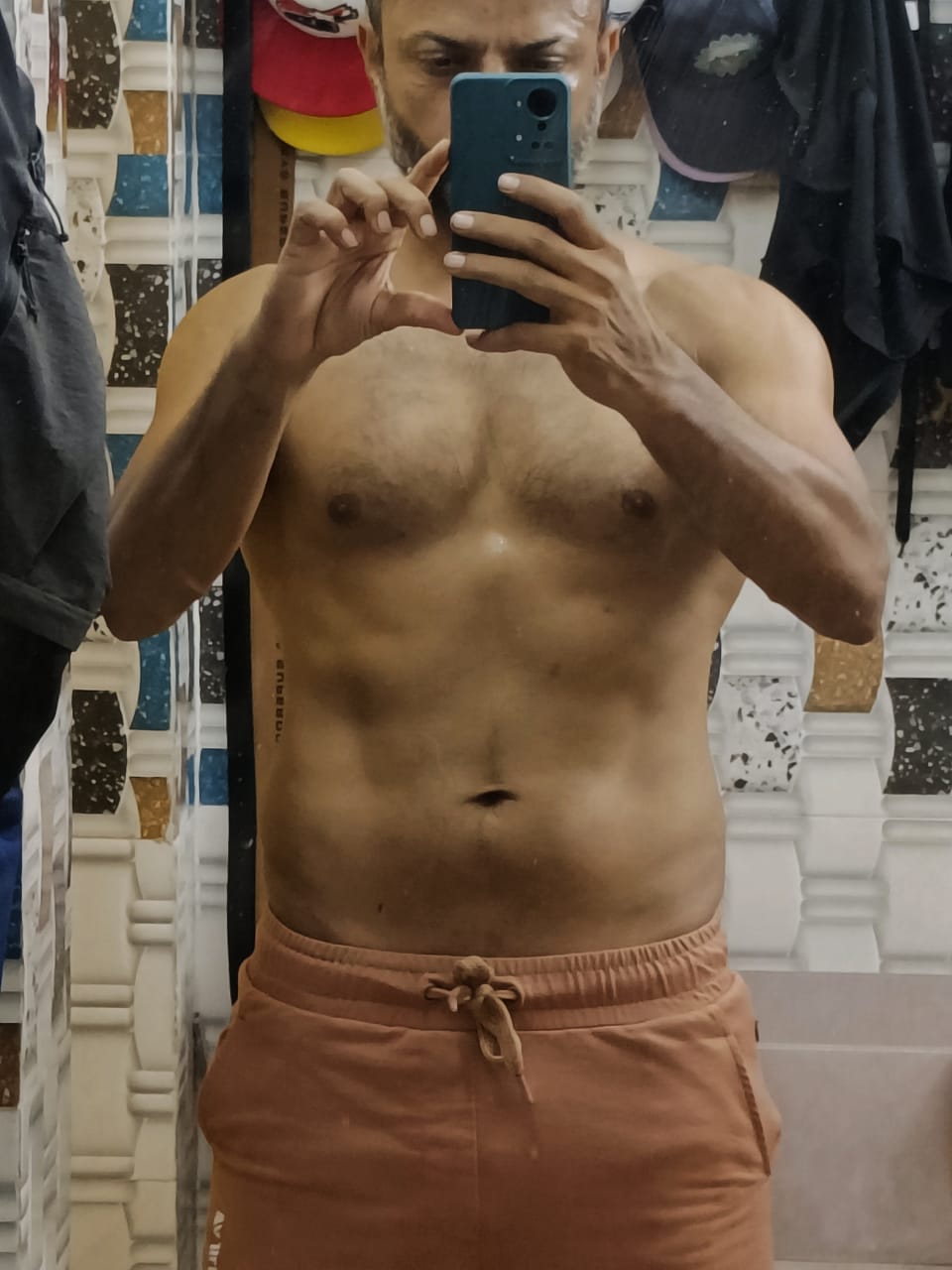
As you can see in my pictures, I have managed to reduce fat from all over my body, including my neck and shoulders, as well as my rectus abdominus muscle (abs). However, I am still left with fat deposits on my sides. If I continue burning fat at this rate, I should be able to burn most of the fat from my abs muscles and lastly, from my sides – right over my obliques and transverse abdominus muscles. There’s no need to specifically target these areas with overdone exercises.
The important thing to remember is not to try to burn fat from a specific location or overwork one body part. Just like any muscle, our sides or abs muscles can become overworked and need to be rested.
You will burn fat if you burn calories, and eventually, it will come down to the abs muscles as shown in the pictures. However, it’s crucial to note that building abs is not the ultimate measure of fitness. Being fit from every angle, even with existing fat, is what counts. On average, we can carry up to 20% fat and still be at our fittest. This means we may not have visible abs, but we are still in good shape. If you do want to showcase your abs, you will need to cut down your fat to 4 to 7%. However, it’s important to focus on overall fitness and not just one body part.
It can be challenging to maintain a healthy diet during tempting times like monsoon season, with delicacies like ghevar and fried foods being traditionally famous in my hometown. However, it’s important to stay on track and ensure that we are not becoming overweight while training every body part to maintain overall fitness.
It’s important to understand that the dietary fat we eat gets stored as body fat. Our body’s preferred fuel source is actually carbohydrates, and when we eat carbs, our body will use them for immediate energy needs. However, since we eat more calories than our body needs for immediate energy, whether from carbohydrates, protein, or fat, the excess calories are stored in adipose tissue as body fat. So while it’s true that we may burn fat if we are eating only fat, the majority of the food from our meal gets stored as fat.
 Umesh Chhikara