
Science: Any processed high fructose food like fruits or even boiled/grilled potatoes will obviously spike up the glucose in our body. Now our body have two options:
a) To take up that glucose into my muscles and burn it and later replenish my glycogen stores – Good use of sugar. In this case I do not need insulin spike because my muscles can utilize glucose without insulin.
or
b) if I do not move at all or move just a little, my pancreas will secrete ‘insulin’ to handle high spike in my glucose. Then the insulin will take glucose from my blood and store in my adipocytes (fat stores) as fat.
……………………………………………………………………………………………………………………….
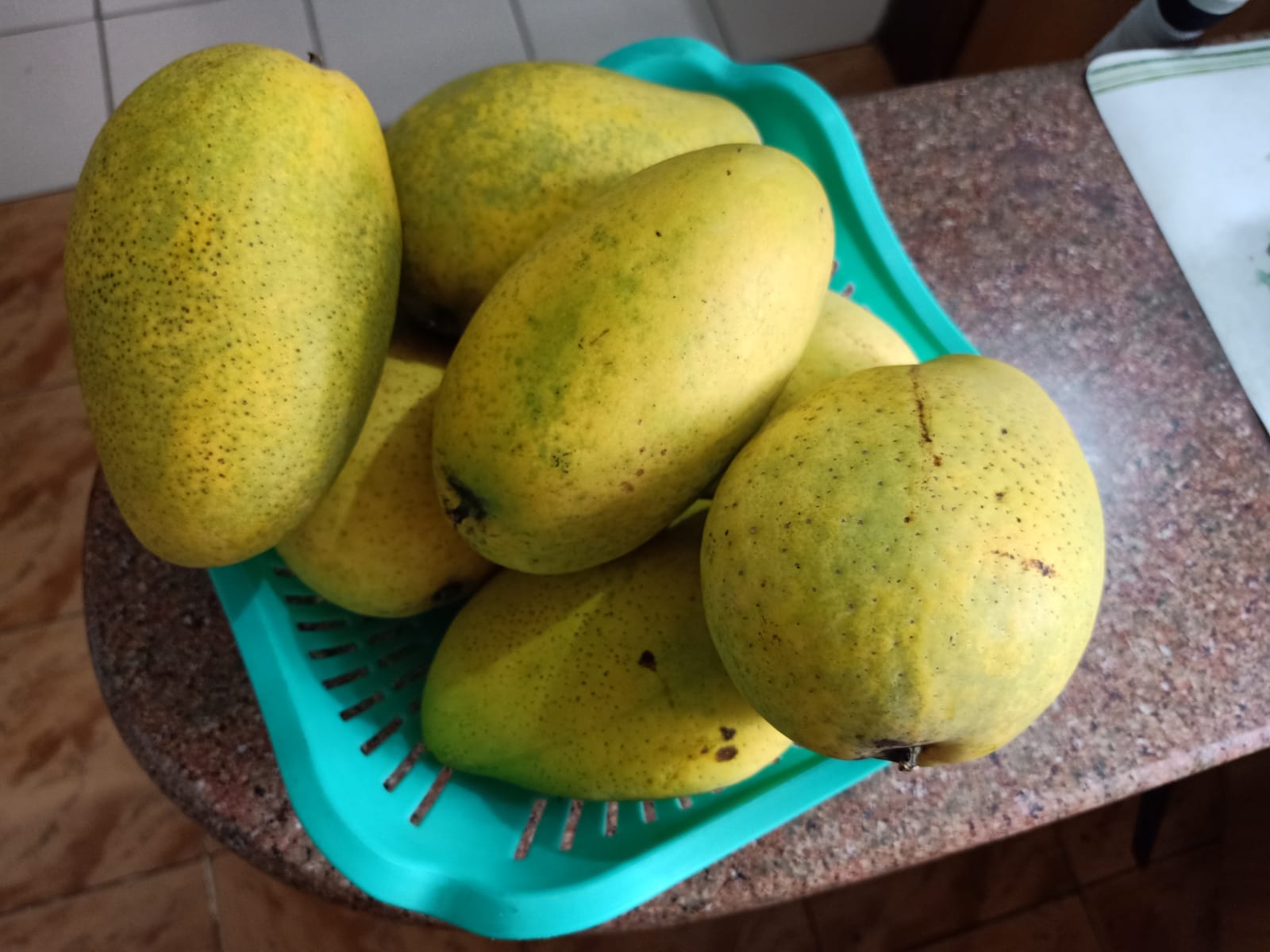
Mango is a fruit that I have inherited genetically. Until my fathers generation, our family had strived on in-season mangoes, because we had huge population of mango plantation in our village. And even today, my father relishes one at 80; and am only 48. There is inseparable love, genetically 🙂
Problem – culturally, we have it with food or post food, in which case, it mostly works as desert. All the vitamins it gives are consumed via our Indian diet anyway, and we wont starve out on them without a mango. Therefore, when we have a mango in fed state, say without the need of vitamins; it only works as sugar and get stored as fat.
Mango has ‘Pure’ calories which are very good stand alone because we can out it to use. But with food, they are additional load for the system that get stored as fat.
Just like I had explained on sugarcane juice & watermelon; a mango is a fantastic fruit if absorbed in hunger state. Just by itself. The 100/150 or so calories that it possess will be put to use immediately by our metabolic machinery. Its nutrition value also stays intact if taken in hunger state as compare to fed state.
Therefore we should treat it as a meal. It could be breakfast or evening snack (after 3 hours post meal). This way we can relish the taste, its sweetness, and squeeze out max nutrients from the delicious fruit.
Also, remember, fruit sugar is different from processed sugar because it’s balanced out by fiber and a host of nutrients for the body.
We are blessed with a mechanism to convert sugar into glucose; digest fructose and convert it to glucose (energy) or store it as pure calories(fat). So the worry pertaining to certain fruit has ‘X’ amount of sugar essentially only pertains to 100/150 calories factually speaking. This is nothing in compare to our daily requirements. But same amount if absorbed in fed state persistently, puts load on our machinery, and in many cases, compromises the metabolic health which is related to liver, gut, kidney, or any other organ in long run besides of course storing those calories as fat. Our liver is blessed with a mechanism to convert fructose to glucose however, like everything, it has a certain quota that it can handle. IF we overload it then it won’t work efficiently which is the case with everything in our life.
So problem with a ‘calorie’ is factually & logically not about its definition. Its more about what effect it can have in different metabolic states. The irony is, it stays as a calorie regardless, It is also the reason of a disease developing chronically, and it works as energy. It is up to us, or our metabolic machinery to be precise, what we make of it.
 Umesh Chhikara