
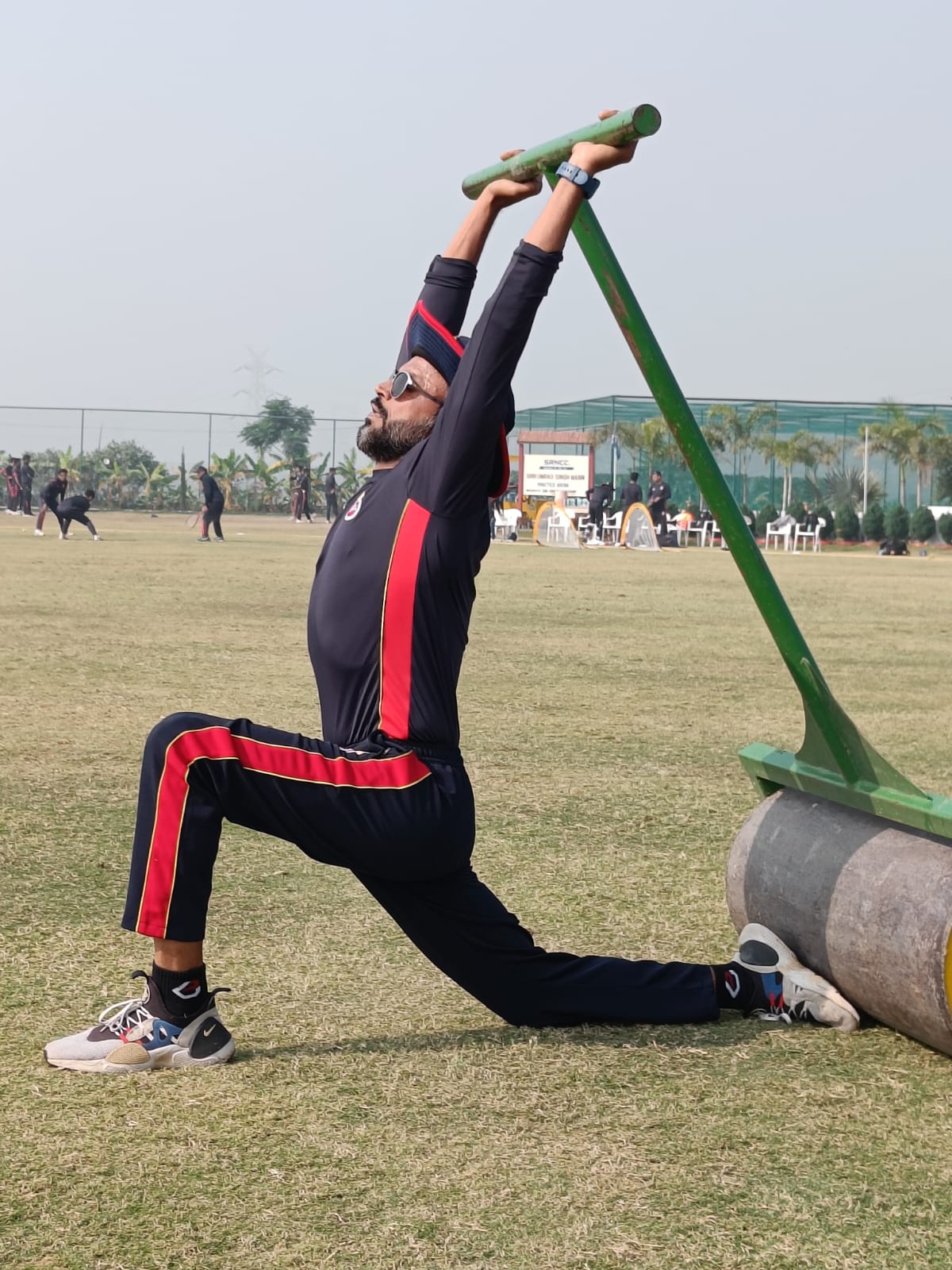
In my writing, I rarely refer to “stretching.” Instead, I use the term “relaxation” to emphasize the crucial connection between the two. Maximum force with minimal energy expenditure is only achievable when a muscle is moved through its full range of motion. Any movement requires the coordination of multiple muscles, making it imperative to train them all, rather than just a few. Flexibility, range of motion, and mobility are all synonymous and essential for smooth, effortless, and fluent action in any sport.
While strength, flexibility, speed, nutrition, and power are critical aspects of sports training, movement fundamentals are the most crucial requirement. The key to training in sports is attending to these fundamentals and mastering them to the best of your body’s adaptation. Although it may not always be possible to replicate another athlete’s movements, the basics of a movement remain the same for everyone. Neglecting movement training is one reason for the increasing number of sports injuries, including hamstrings injuries in cricket or elbow injuries in baseball pitchers.
Movement can be trained in various ways, but stretching is often ignored in today’s sports world. Researchers have shown that static stretching may not help a few subjects in certain situations coming from certain backgrounds in specific conditions, leading to a mistaken belief that stretching is not critical.
For example: its not a good idea to do static stretching and directly jump into doing power movements. Why? Because static stretching can potentialy inhibit muscle spindles, and essentially dissipate kinetic energy from nerves or connective tissue. However, if we allow for dynamic warm-up post static stretching, it takes away this negative aspect completely by inducing kinetic energy.
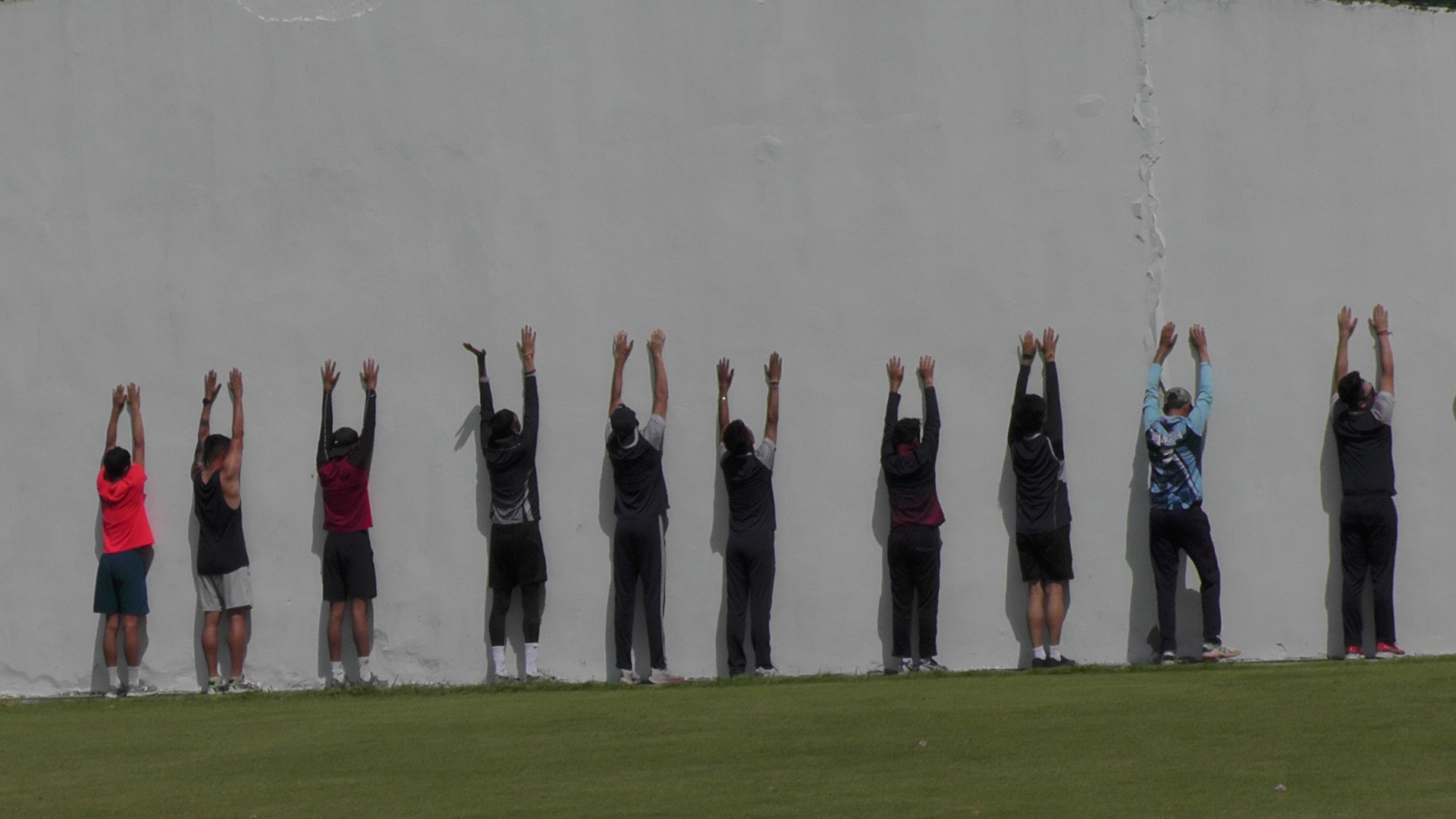
Is there a single training approach that can fulfill all needs?
While Yog has been practiced for centuries to enhance attention, focus, breathing, flexibility, nervous system, and eccentric training, it often gets overlooked in favor of more modern strength training and ways to target the central nervous system and strength. However, it’s important to note that not all athletes can practice Yog due to imbalances caused by their particular sport movements. Therefore, we must understand the fundamental science of Yog and modify it to suit the specific requirements of our athletes, just as we would with any other training method. A comprehensive training approach should combine various methods, such as strength and conditioning, movement science, endurance, flexibility, nutrition, and yoga, each adapted to a specific sport. Even our minds should be trained according to the demands of the sport. Ultimately, no single form of training can be considered complete on its own.
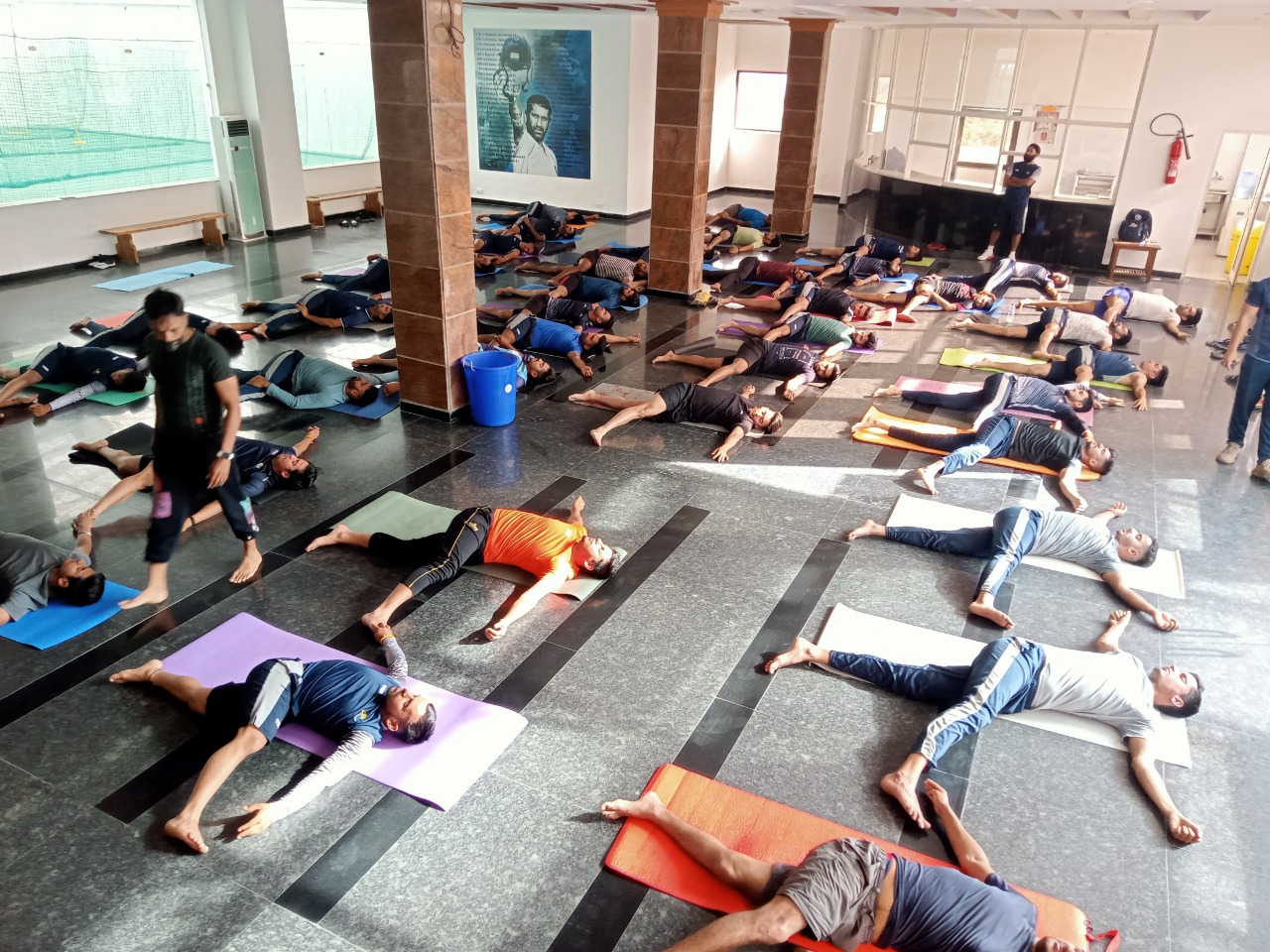
Understanding the importance of stretching and its impact on our body is crucial. Our muscles can become tight, inactive, overactive, or fatigued due to overuse, which can cause imbalances in our body. Activating inhibited muscles is necessary to achieve equilibrium. While research studies on training are valuable, it’s vital to consider the conditions, environment, sport, time of year, and the players’ condition before implementing the results. Factors like nutrition, sleep, genes, and the player’s background can affect their response to training. Therefore, a one-size-fits-all approach is not ideal.
Human body principles don’t change but their functioning behaviour does on the basis of how we treat our body. Fluency in a movement comes naturally if our body is trained for it. Therefore, when it comes to training, we must not only focus on how to exhaust the body, but also on how it is built. If we give our body what it needs, it will give us back what we are striving for.
Static stretching before a warm-up or training should depend on the player’s physical condition that morning and how they have used their muscles in the last 24/48 hours. I have personally tested this on my own players and found that starting with static stretches sometimes yields better results than other days. In fact, they felt lighter throughout the session. Why? Because they gave their body what it required, rather than blindly following what was written in the book.
Ultimately, it is important to understand the reasoning behind a particular practice, but if it doesn’t coincide with our circumstances, we need to evaluate what is right for our players. Swearing by any one practice can lead to injuries. A warm-up should be tailored to each player’s body condition that morning and how they have been using their muscles recently. If someone feels stiff, they should do light stretches before putting their muscles under strain again. And if they feel stiff every day, they should seek expert help.
Learning: Incorporating stretching into your training regime is crucial for keeping players injury-free.
 Umesh Chhikara
Thanks for sharing. We teach in Hatha Yoga that the muscle efficiency (contractability) is dependent on the degree of muscle length ie. stretch.