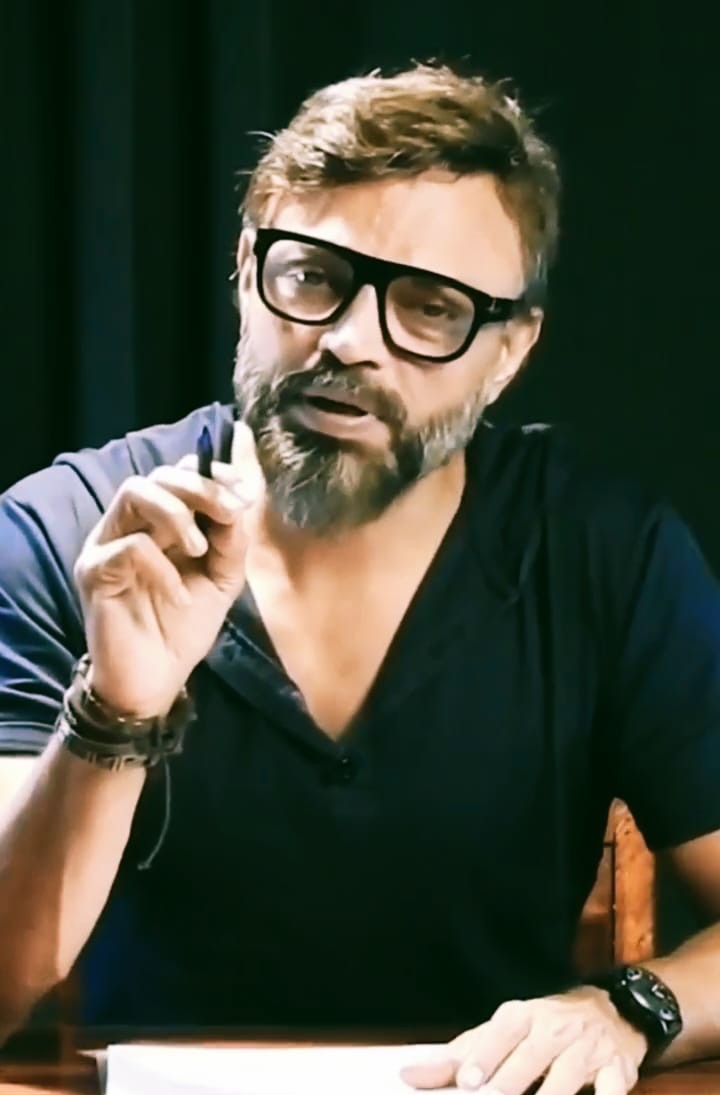
Who Am I
I am a sports scientist by training, and a lifelong student of the human system by temperament.
Over the past two decades, I have studied hundreds of research papers across biomechanics, physiology, metabolism, neuroscience, and aging. I host the health podcast Rambaan, where I translate complex science into practical clarity. I am the author of Wiring to Wisdom: A Guide to Human OS as an Operating System, a book that explores the body not as separate parts, but as one integrated architecture.
My own body has remained part of the inquiry. At 51, my blood markers resemble those typically seen in people decades younger. This has not come from supplementation or extreme regimens, but from consistent food choices, deliberate training, recovery, and mental alignment.
Beyond theory, I have worked with hundreds of individuals across sport and general health. The learning has always been reciprocal.
My Experience
My professional journey began in sport, particularly cricket, and later extended to baseball, hockey, football, golf, and wrestling. Across five seasons in professional cricket and multiple training camps, athletes trained under my system remained injury free. The goal was not short term performance spikes, but durable robustness.
Over time, I began handling increasingly complex rehabilitation cases, including individuals living with unresolved pain for 10 to 15 years. Many had already consulted multiple experts. The work required returning to first principles of load, alignment, neuromuscular coordination, and metabolic context.
Metabolic interventions have been equally instructive. In controlled environments, I have run intensive weight restructuring programs, including a documented 5 kilo reduction in 5 days under supervised metabolic alignment. The focus was not speed, but understanding how hormonal signaling and fuel utilization respond when variables are precisely calibrated.
I also deliver talks on health, performance, and longevity, attempting to simplify what is often made unnecessarily complicated.
My Current Practice
Alongside writing, research, and producing the Rambaan podcast, I run a small clinic in Delhi.
Most people who come to me are not beginners. They are individuals whose cases are labeled complicated. Persistent injuries that do not resolve. Metabolic dysfunction despite disciplined dieting. Weight loss efforts that repeatedly stall. Athletes training hard but regressing.
To me, a case becomes complicated only when the standard pathway fails. At that point, I step back and examine the entire system. Structure, metabolism, nervous system, recovery patterns, cognitive load. When conventional advice does not work, the solution is rarely more force. It is better integration.
This approach is reflected in my case studies and long term outcomes.
Education
My academic journey has had more than one phase.
In an earlier academic life, I completed a B.Sc, studied Law, and earned an MBA. Those years shaped my analytical thinking and world’s experience.
Later, I formally transitioned into human performance and health.
Master’s in Sports Science
Diet and Nutrition Coach
Human Movement Specialist
Strength and Conditioning Trainer
Integrated Manual Therapist
Yoga Teacher and Therapist
My study interests continue to evolve. They include biomechanics, neurobiology, genetics, brain science, metabolism, and the deeper inquiry into mind. I also explore classical wisdom traditions such as the Bhagavad Gita, Buddhism, and Stoicism, not as philosophy alone, but as practical frameworks for resilience, perception, and human behavior.
Formal education provided the framework. Practice, experimentation, and lived application refined it.
Future Project
My next step is an immersive health research and transformation documentary series designed for an OTT platform.
The aim is not entertainment alone, nor isolated measurement. It is to demonstrate, in real time, how interconnected human health truly is. Structure influences metabolism. Metabolism shapes cognition. Thought patterns affect inflammation.
The intention is simple: to show that meaningful health transformation is not extreme or punishing. When systems align, change becomes surprisingly natural.
 Umesh Chhikara